Plain words, uncommon sense

Category: Book Reviews (Page 33 of 47)

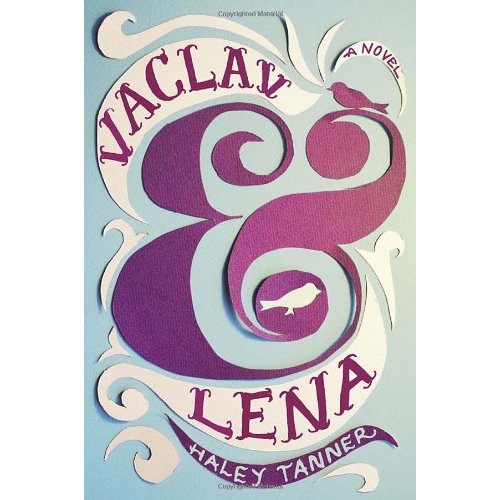
Book Review: Vaclav & Lena by Haley Tanner

image

Vaclav & Lena is the love story of two Russian immigrant children who meet at a young age and are separated by events that involve Child & Family Services. Lena is taken away but never forgets Vaclav. Vaclav never forgets Lena. And on her 17th birthday Lena calls Vaclav and they reconnect.

The Russian accented English prose sets the stage for this Brooklyn family who is struggling with the hardships of leaving family in Russia and establishing themselves in America. Vaclav is a bit odd. He’s obsessed with Harry Houdini, becoming a famous magician, and making lists. He finds a perfect companion in Lena, who is another solitary figure in his ESL class.

Lena’s Aunt and Vaclav’s Mom Rasia agree on a playdate for their small children. Rasia will take them to Coney Island for the day. When Vaclav and Lena go off to play on the rides, they discover that the clowns say Lena is too small for every ride they try. They wander mistakenly into the Coney Island Sideshow to watch Fredini and Heather Holliday in her gold bikini, which is the catalyst of their secret, scheming relationship.

Quote: THINGS THAT ARE:
1. One day being a famous magician
2. Lena being lovely assistant
3. Perseverance toward those goals in spite of any and every obstacle

Haley Tanner has written a lovely, lovely first novel. There is something about the perseverance of first novels that leads to perfection. The story isn’t just charming, it’s a balance of light and dark. The maternal watchful eye of Rasia is comforting and terrifying. The relationship between Vaclav and Lena is poignant and bewitching. I really enjoyed this novel. Big recommendation.

Vaclav & Lena
by Haley Tanner
published by Knoff Canada

Book Review: The Tiger by John Valliant

Amur tiger

There is no dispute that John Valliant is an excellent writer, and The Tiger is just another example. This nonfiction story is about a man-eating tiger on the prowl in Russia’s Far East. The main plot is about Yuri Trush, lead tracker, and his work to investigate the killing of Vladimir Markov by a tiger. It is a grizzly affair, and Markov is not the tiger’s last victim.

The background story is of Russia in the 1990s and 1980s, as well as some historical vignettes, that help readers understand Russia, the Far East, the culture of Russians in the Far East, and the poverty of this remote village and what has led many of its residents, including Markov, to become poachers and involved in the illegal trade of tigers with their Chinese neighbours across the border.

The tiger-Markov story is by far the more interesting thread in the book, but the cultural and historical information help the reader gain perspective and a deeper understanding of the characters involved and their motivations. The story begins in December 1997, with Markov making an arduous trip through the heavy snow back to his cabin. Unbeknownst to him, and not detailed in the story until much later, a tiger is waiting for him, not just waiting, but has plotted his demise with a vengeance.

As readers learn through the tale, tigers are incredibly adaptive to their environment and highly intelligent. They have a memory, which makes them master hunters, and are able to operate in stealth mode, making themselves invisible until they pounce. The male amur tigers of this region (aka Siberian tigers) can grow to ten feet long, weighing more than five hundred pounds. They are the world’s largest cats and there’s only about 400 of them left in the wild.

Valliant has a couple lines that are imprinted on my mind. The amur tiger can leap across a residential street in a single bound. And tigers are some of the few animals whose roar is like the thundering of god. He paints an unforgettable portrait of the amur tigers, and his depiction of the native tribes who’ve worshipped tigers for centuries reinforces the tiger’s reputation as the “czar of the forest.”

The Tiger: A True Story of Vengeance and Survival is about a showdown between Markov and the tiger; the tiger and Yuri Trush who must destroy him, Trush and the poachers he is meant to stop in order to conserve the tiger population in this area, the poachers and the Russian government that has left them destitute, and tiger conservationists against the Chinese, whose appetite for the medicinal and spiritual uses of tiger parts is insatiable.

The Tiger: A True Story of Vengeance and Survival
by John Valliant
published by Viking Canada

Book Review: There Is No Dog by Meg Rosoff

If God was a petulant 18-year-old then his name would be Bob and he would have won rule over Earth in a botched job application process. Bob would have been the only applicant, put forward by his mother who sat on the committee. Well, he wouldn’t have been the only applicant. Mr B would have also applied but the committee would find him very sensible and boring. In this version of Earth’s beginning, a decision by committee–which always works, right?–would have seen Bob and Mr B become the co-rulers of Earth.

In six days, Bob created the heavens and the earth, the beasts in the field and the creatures of the sea (well Mr. B did the whales), and 25 million other species, including lots of pretty girls for Bob to chase.

Quote: And Bob said, “Let there be light,” and there was light.
Only it wasn’t very good light. Bob created fireworks, sparklers and neon tubes that circled the globe like weird tangled rainbows. He dabbled with bugs that blinked and abstract creatures whose heads lit up and cast long overlapping shadows. There were mile-high candles and mountains of fairy lights. For an hours or so, Earth was lit by enormous crystal chandeliers.
Bob thought his creations were very cool.
They were very cool but they didn’t work.
So Bob tried for an ambient glow (which proved toxic) … And finally, when he curled up in the corner of the nothingness, tired as a child by the harebrainedness of his efforts, Mr B took the opportunity to sort things out.

Congratulations Bob. Six days. No wonder the world is a mess.

Bob is careless, self-obsessed, and rather bored. He spends a lot of time sleeping and sulking, which leaves Mr B to sort out famine, war and floods. On top of that, many of the disasters are directly related to Bob having a bit of a mood as he lusts after mortals. In this century, the apple of his eye is Lucy, a nice zookeeper who has a Renaissance look and is a charming virgin, much to her own chagrin.

Bob could appear to her as a swan, or bull, but he’s thinking this time he’ll just show up and do what mortals do, take her for dinner.

For Earth’s sake, it better work out. And if it doesn’t, I recommend building that ark.

There Is No Dog is a hilarious read. I enjoyed it immensely.


There Is No Dog
by Meg Rosoff
published by Doubleday Canada

Book Review: The Penderwicks by Jeanne Birdsall

The Penderwicks is Jeanne Birdsall’s first book and I’m quite pleased that she’s since written a series about the four Penderwick sisters. Rosalind, 12, is the oldest, then there’s Skye, Jane and Batty. Plus Mr. Penderwick and Hound, the dog.

In this first novel, the Penderwicks find themselves summering at the beautiful estate called Arundel. The grounds are magnificent, the cottage quaint and the owner of the estate is a cold-hearted, nasty woman who cares about her garden winning first place in the Garden Competition, her son being well behaved and the four Penderwick daughters being out of sight. (Ok, she’s not really cold-hearted, but she rather sharp tongued and a bossy boots.)

The Penderwicks is charming. If you’re a fan of The Sound of Music, Pippy Longstocking, or any of Enid Blyton’s books, then this new series will seem like an old friend.

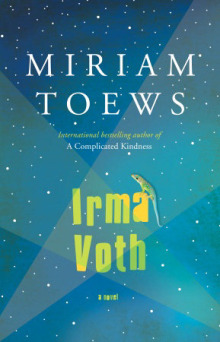
Book Review: Irma Voth by Miriam Toews

Lots of good writing exists in Canada, but there are a couple of authors who stand out for me and Miriam Toews is one of them. Maybe I recognize the Prairie sense of humour, or maybe she’s just really good.

Irma Voth is the quirky protagonist of this novel. She’s 19, married, Mennonite and living in Mexico. The problem is that she married a narco Mexican named Jorge who wants her to leave Campo 6.5, and whether he’s a narco or not, her father disapproves of Mexicans, anyone who leaves the campo, and everything his daughters do or want to do.

Quote: If my dad’s assessment was accurate this place was teeming with narcos, and not just the garden-variety narcos but narcosatanics in search of sensations (like Jorge, allegedly), bored with drinking blood from skulls and poised to bolt for bigger thrills while the rest of us were in it for the long haul, working hard and honestly for very little money, the way God meant for us to be. But I didn’t believe it. I think my uncle got a job selling cars in Canada and Wilf wanted to study the violin and my aunt thought it would be cool to get a prm. But who knows. Maybe they’re a family of drug lords now, throwing bodies out of helicopters and bowling with the heads of double-crossers. That would be my father’s theory.

The reclusively of Irma’s Mennonite community makes for some misunderstandings and confusion when a film crew moves in to make a documentary of the community. Irma, already ostracized from her family, is swept up in the madness of the film and hired as a translator for the lead German actress. Her innocence and curiosity is a virtue and a pesky annoyance to those more worldly. What I like about Toews’ writing is that Irma’s ignorance and questioning is more sound than the seemingly insightful musings of the film director, the lead actress, the film crew and Jorge. Irma gets it, even when she doesn’t.

Irma Voth was a fun read. I recommend it for those seeking some light summer reading.
Also available as ebook.

image

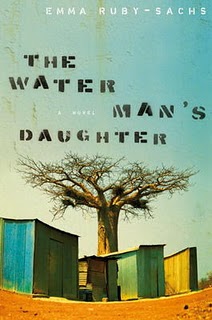
Book Review: The Water Man’s Daughter by Emma Ruby-Sac

image

Congratulations to Emma Ruby-Sach on her debut novel, The Water Man’s Daughter. I really enjoyed this mystery. I never think that I am a mystery reader, but there was something about this title in the M&S catalogue that caught my attention. I’m pretty sure it was the bright cover but the description made it sound more like a literary novel than a mystery. I wasn’t disappointed.

This murder mystery takes place in South Africa, and the murdered man is Peter Mathews, a Canadian business man whose company is responsible for the privatization of the water supply in Johannesburg. His murder takes place in one of the townships and is rather grisly.

Claire, his daughter, arrives from Canada hoping to find some answers about what happened. She is put in the care of Nomsulwa, a local activist who dug up the water company pipes only days before the murder. Nomsulwa is tasked with touring Claire about by Zembe Afrika, our third female lead. Zembe is a policewoman in the township and is struggling to balance her community sentiments with her work ambitions.

All three women are fascinating characters and The Water Man’s Daughter is such a great read because of that. Claire is struggling with understanding her personal relationship with her father and her objective understanding of the work he was doing in South Africa. Nomsulwa is struggling with her desire to hate Claire and her water company connections while sympathizing with Claire’s broken allusions of her father. And Zembe is stuck trying to protect those she can in the community while turning a blind eye to injustices that in the end serve the community.

Emma Ruby-Sachs certainly writes like she’s no stranger to publishing novels. The twists and turns had me going until the end.

Book Review: The Water Man’s Daughter by Emma Ruby-Sac

image

Congratulations to Emma Ruby-Sach on her debut novel, The Water Man’s Daughter. I really enjoyed this mystery. I never think that I am a mystery reader, but there was something about this title in the M&S catalogue that caught my attention. I’m pretty sure it was the bright cover but the description made it sound more like a literary novel than a mystery. I wasn’t disappointed.

This murder mystery takes place in South Africa, and the murdered man is Peter Mathews, a Canadian business man whose company is responsible for the privatization of the water supply in Johannesburg. His murder takes place in one of the townships and is rather grisly.

Claire, his daughter, arrives from Canada hoping to find some answers about what happened. She is put in the care of Nomsulwa, a local activist who dug up the water company pipes only days before the murder. Nomsulwa is tasked with touring Claire about by Zembe Afrika, our third female lead. Zembe is a policewoman in the township and is struggling to balance her community sentiments with her work ambitions.

All three women are fascinating characters and The Water Man’s Daughter is such a great read because of that. Claire is struggling with understanding her personal relationship with her father and her objective understanding of the work he was doing in South Africa. Nomsulwa is struggling with her desire to hate Claire and her water company connections while sympathizing with Claire’s broken allusions of her father. And Zembe is stuck trying to protect those she can in the community while turning a blind eye to injustices that in the end serve the community.

Emma Ruby-Sachs certainly writes like she’s no stranger to publishing novels. The twists and turns had me going until the end.

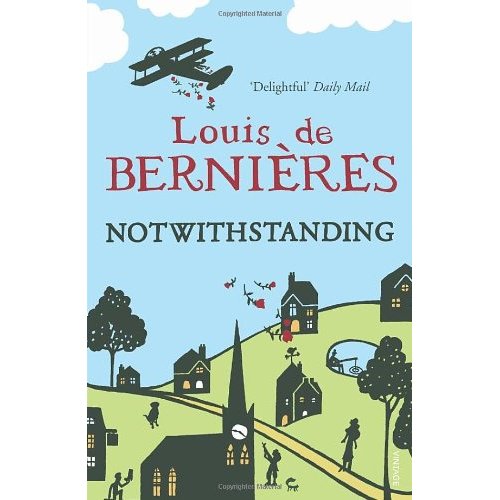
Book Review: Notwithstanding by Louis de Bernieres

image

This book is as charming as its cover! De Bernieres’ collection of short stories showcases the eccentrics of a fictional English village named Notwithstanding. It’s a wistful look at the village’s inhabitants, who, according to the afterword, are based on De Bernieres’ childhood neighbours in Surrey: “the belligerent spinsters, the naked generals, the fudge-makers, the people who talked to spiders.”

One of my favourite characters is the “hedging and ditching” man who is constantly reflecting on the objects he discovers in the muck of the ditches. “The generally credited rumour was that he was the wealthy scion of an aristocratic family, who hedged and ditched in order to escape the fathomless tedium of an idle life filled with scones and trivial conversations.” Eye roll. Of course. He couldn’t just be a hedging and ditching man.

Then there’s Mrs Mac, who talks to ghosts, and Peter, who catches the Girt Pike, and the auspicious encounters of the famous Notwithstanding wind quartet.

I’m a fan of short stories and these interconnected tales tell a charming and witty history of a handful of quaint villagers who are a curiosity to everyone but themselves.

Notwithstanding by Louis de Bernieres (author of Captain Corelli’s Mandolin)
Published by Vintage

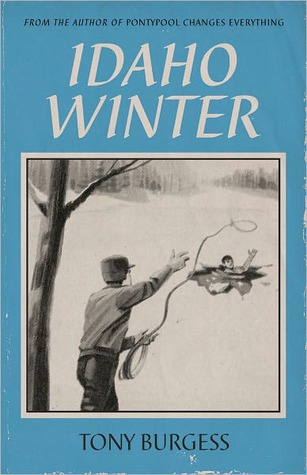
Book Review: Idaho Winter by Tony Burgess

image

Idaho Winter is one of those books that is going to mess with your mind. The cover makes it seem like it’s a reprint of a book published in the 40s or 50s. The opening scene is reminiscent of Harry Potter, in that Idaho is the boy cramped in a tiny room and unloved by his family, and Back to the Future, where McFly is bullied by Biff. Like Harry Potter, the reader learns what’s happening at the same as Harry does. In this case, the reader learns what’s happening at the same time as the author, who is our narrator and main protagonist, that is once it switches from Idaho. Very post modern. Like Back to the Future, Marty McFly can mess things up and prevent his parents from getting together. In this case, the author, or any character, could, and has, messed things up.

Confused? Let me tell you a little about the story.

Idaho gets beaten up, flees to the river, where he finds Madison, who wants to be his friend, but the kids, dogs and adults of the town chase him down and sic the dogs on him. But the dogs get Madison instead. Then Idaho becomes a giant and there are Mom-bats and secret caves and people turn into chocolate. Not kidding.

Idaho Winter is one of the most bizarre books I’ve ever read. I don’t mean that critically either. Do you know how dream stories are bizarre when told in the light of day? Well, that’s Idaho Winter. Characters morph into other characters. Perspective changes. Landscape shifts and changes. Things that are unexplainable make perfect sense, at the time.

Related Links:
Amazon Search Inside
Buy the Book from Publisher ECW Press
More reviews on GoodReads

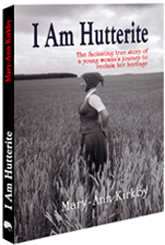
Book Review: I Am Hutterite by Mary-Ann Kirkby

image
Mary-Ann Kirkby is a fantastic writer. Her first book is I Am Hutterite, which chronicles her childhood experience living on a Hutterite colony and her family’s integration into community life off the colony in the 1970s. It’s jarring and enlightening for both the reader and the 10-year-old version of Mary-Ann in the book.

In 1969, Mary-Ann was happily living on a Hutterite colony near Portage la Prairie, MB, which is about a hour drive from Winnipeg. With seven children in the family and an insular lifestyle, Mary-Ann’s family is representative of the Hutterite families I knew growing up.

In case you’re not from that part of the world, the prairies are home to the largest concentration of Hutterites in the world. They dress very conservatively, with women wearing handkerchiefs and long dresses. The community lives together and shares resources, including childcare, food preparation, farming and manufacturing. Like the Amish and Mennonites, they trace their roots to the Radical Reformation of the 16th century and most of their beliefs and practices have been passed down through the centuries.

Mary-Ann’s portrayal of life on the colony is certainly an eye opener. I only visited 1 colony growing up and was at a teenage stage where I couldn’t imagine having grade 12 education and then cooking and cleaning for the rest of my life. My other experiences were with kids whose families had left the colony or with young men from the colony who would visit with my step-father to discuss farming and to sneak in a little bit of hockey watching in our family room.

Mary-Ann’s insights open up that world and the hierarchal structures in a way that is charming and enlightening. Her take on both colony life and off-the-colony communities was interesting to me since I’ve been hearing more Canadians talking about “co-housing” and other options for community life. Mary-Ann’s portrayal of the traditions of colony life offer interesting checks and balances to those co-housing models. But, back to Mary-Ann and her book …

In Mary-Ann’s case, her parents decided in 1969 that the support of the colony was no longer viable for them. Intolerance and mistrust forced their hand and they moved off the colony. The majority of the book chronicles life on the colony, with the final quarter or so being about Mary-Ann’s trials and tribulations trying to figure out how to fit in with the English kids at school. Not only is clothing different but lunch, dancing, and social structures are fraught with misunderstandings–all of it is at times overwhelming to her.

Since the release of I Am Hutterite in June 2007, the self-published book has sold 75,000 copies and surely deserves to sell more. A great book. You can buy the book here.

« Older posts Newer posts »

© 2026 So Misguided

Theme by Anders Noren — Up ↑