Plain words, uncommon sense

Category: Book Reviews (Page 30 of 47)

Book Review: The Chaperone by Laura Moriarty

The Chaperon by Laura Moriarty reminded me a little bit of The Paris Wife. The book opens in 1922 during a summer in Wichita when not much is happening for Ms Cora Carlisle. Both her sons are grown and moved away, her husband’s successful law practice keeps him busy and Cora is idling away her time. What seems like an adventure is presented to her: chaperon 15-year-old Louise Brooks to New York City for her dance audition.

Cora, of course, has her own private reason for making the trip, and it’s not just boredom. We quickly find out that Cora was orphaned in New York and was sent out on an orphan train to be adopted by willing parents, who have since died. Her plan is to accompany Louise and seek out her birth parents. The orphanage has already refused to provide that information by mail, but Cora is optimistic.

The part of the story that reminds me of The Paris Wife is the insights into the 1920s. It was a time of transition where skirt lengths (above the ankle) were still shocking and girls were coached that no man would want to marry an unwrapped piece of candy. At the same time homosexuality, the bob haircut, jazz and other shocking disregards for convention (like black and white people sitting side by side in the same theatre) were part of daily life in a bustling metropolis like NYC.

Cora takes all the shocks in stride, in particular the difficulties posed by Louise’s free-spirit attitude, and really finds her own place in the world. She goes by to Wichita with quite a backbone.

The Chaperon by Laura Moriarty
Published by Riverhead Books (Penguin Canada)
Available in hardcover on amazon.ca

Book Review: Canada by Richard Ford

image

Richard Ford is a writer who I’ve admired for decades. And, who wouldn’t be an admirer of this cliffhanger of an opener?

“First, I’ll tell you about the robbery our parents committed. Then about the murders, which happened later.”

I once met a woman after the tragic death of her husband and she said that she forgave the killer because her choice was to either let that event be the defining moment of her life or to continue living. I still don’t fully understand, but I think it’s what Ford is slowly unwinding in this epic story about how 15-year-old Dell Parson’s life is derailed by the bank robbery his parents commit.

Unlike in The Sportswriter, the first novel I read of Ford’s, each moment isn’t imbued with significance. Some things just happen and other things happen with meaning. The writing is more mature, but it’s also a slower pace so I’m not sure whether I liked Canada or whether I liked finishing Canada.

The novel is divided into three parts, and I found the first the most interesting as it sets up the bank robbery and immediate capture of Dell’s parents (it wasn’t exactly well thought out). The setting is Great Falls, Montana in the 1950s and Dell’s dad is a military man, then car salesman, then used car salesman, then … a bit of an everything man. Each failure takes him closer and closer to committing a crime to get money, in the hopes that the cash can be used to pay people off.

The second part describes Dell’s family falling apart. Both parents are arrested. His twin sister runs away, and Dell is left to trust a family friend who is falling through on Dell’s mother’s plans to have both kids squirrelled away in Canada. Dell is left across the border in Canada with a mysterious American who’s running a bar/hotel and organizing hunting trips, among other things. But his shady past rears its ugly head and becomes just another in a series of unfortunate events that Dell has to extract himself from in order to survive on his own.

The third section reunites Dell with his long-lost twin sister Berner. She’s also in a dark place, and it’s interesting as a reader to think about twins, separated, and how they’ve lived their lives. In particular whether you let your parents’ robbery be the defining moment of your life or not. For Dell, I’d say it’s a significant moment but not the defining moment. He is more detached from the world than damaged by it, whereas Berner, who thought she was so grownup and above it all, is actually trapped by it.

Canada is a different type of Richard Ford so if you’re unfamiliar with his other works, then this one might seem like a masterpiece. For me, I couldn’t help but reflect on the writing I knew vs. the writing I had in front of me. Stylistically it’s wonderful, just not what I was expecting. There is a culmination of strength to this novel, which mirrors Dell’s growth from adolescences to adulthood. The novel is impressive but not one of my favourites.

Canada by Richard Ford
published by HarperCollins
Available on Amazon.ca

Salon Fiction Prize: New Canadian Short Fiction Prize

image

Attention writers: The Telegraph-Journal, New Brunswick’s provincial daily newspaper ( http://www.telegraphjournal.com ) recently launched a new short fiction prize.

The Salon Fiction Prize, which opened July 7, is for a work of short fiction in English between 1500-3000 words. The winning piece will be published in an issue of the Telegraph-Journal’s art and culture section “Salon”, and the winning author will receive a prize of $1,000.

The trio of judges are from Atlantic Canadian universities: Thomas Hodd (University of Moncton); Alexander MacLeod (Saint Mary’s University); and Sue Goyette (Dalhousie University).

The contest is open to all residents of Canada. All entries must be unpublished material and not under consideration in any other contest of competition. Entries will not be returned, so keep a copy.

Submission Details

  • Deadline: Entries must be received by Oct. 1, 2012.
  • Submissions may be sent via email to salon@telegraphjournal.com or by mail to 210 Crown Street, Saint John, N.B., E2L 3V8.
  • Entries must include a contact email and telephone number where the author may be contacted.

For more details and information, email salon@telegraphjournal.com

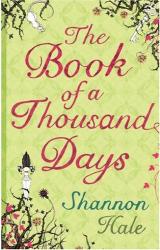
Book Review: Book of a Thousand Days by Shannon Hale

imageBook Of A Thousand Days by Shannon Hale was recommended to me by my friend Rachael. I was keen to read it because when I worked at Raincoast we had distributed some of Shannon Hale’s previous titles.

The story opens with Dashti becoming a maid to Lady Saren and promptly being locked up in a tower with her for seven years. Saren’s father, in a rage, has bricked her up into the tower because she has refused to marry an evil lord from a neighbouring realm. Instead she is in love with Tegas, a more gentle lord, and another neighbour.

This love is rather tenuous though and Lady Saren insists that Dashti speak to Tegas when he sneaks into the tower and knocks at their locked door. Of course, Dashti complies, falls in love with Tegas, has to fight for her safety when evil Lord Khasar later shows up at the door, fends for herself and Lady Saren when they manage to escape and then sets them up, under a disguise, in Tegas’ own household.

Dashti is a heroine in the classic sense and a terrier in a modern sense.

Hale’s tale is pulled from a long-forgotten Grimm’s tale, but she adds her own twists and interpretations. Overall it’s a great teen read, and good for adults looking for light fantasy and easy, compelling reading.

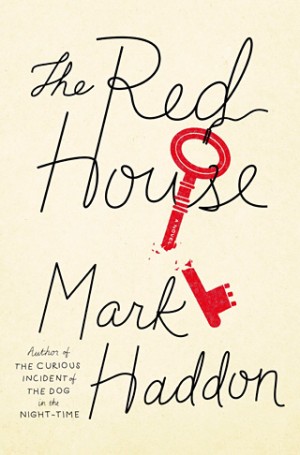
Book Review: The Red House by Mark Haddon

image

The Red House is the latest novel by Mark Haddon, author of The Curious Incident of the Dog in the Night-time and A Spot of Bother. The novels are getting more and more experimental and deeper into the psyche of the characters. In some ways A Spot of Bother and The Red House remind me of Martin Amis novels in that we get a low-class to middle-class view of the British and the protagonists are losers in some way, and continue to be losers even at the end of the novel.

In The Red House we have a brother and sister, Richard and Angela, who’ve drifted apart but are reunited after the death of their mother. Richard, who is younger and more successful a doctor, albeit with a lawsuit pending‚ has invited his sister and her unemployed husband and three children on holiday. Richard also has his new wife Louisa and her teenage daughter Melissa in tow. Louisa seems to be the least developed character. She’s initially presented as the trophy wife who is amenable to everything and everyone. She has a small triumph in confronting Richard midway through the book but otherwise isn’t as developed as her daughter, who is beautiful outside but not inside, Alex the athletic son, Daisy the Christian, Benjy the little kid, Angela the self-proclaimed underachiever who is losing a grip on reality or Dominic the weak father. But then again, the novel really isn’t about anyone.

The crazy thing about this book is that the perspective shifts, almost at every paragraph, from one character to the next. This is a bit of a challenge in the beginning because on top of the shifting perspective, some of the characters are reading books so you get their interior monologue as they read.

Overall, the book was enjoyable but not my favourite Haddon novel, which still remains Curious Incident. Regardless, if you’re a Haddon fan, then give this one a go. Like Spot of Bother, it’s not an uplifting ending but it’s not depressing either.

The Red House by Mark Haddon is published by Doubleday Canada.

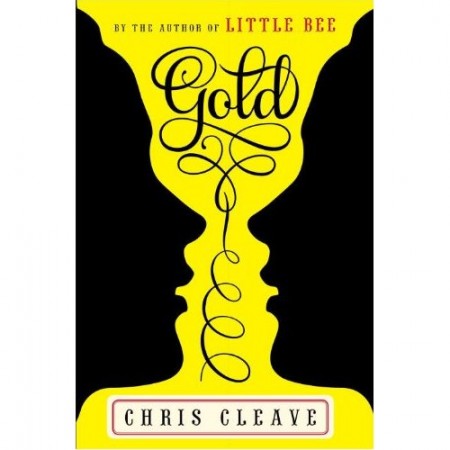
Book Review: Gold by Chris Cleave

Two years ago I read and loved Chris Cleave’s novel Little Bee. I loved it, thought it was brilliant and was definitely looking forward to Gold, which did not disappoint!

image

Basic plotline: Gold is about the upcoming London Olympics and 3 British cyclists who are vying for a spot on the podium. But just as Little Bee wasn’t about immigration, Gold isn’t about the Olympics.

Chris Cleave throws readers his usual twists and turns, giving us Kate and Zoe, two driven athletes who are friends and competitors and Jack, Kate’s husband, and I can’t tell you any more otherwise it spoils the surprises, but all three are world-class cyclists.

You can practically feel the blood pumping in these woman’s legs as they fight for every finish‚ and fight through every part of their friendship as well. In some ways the novel is about humanizing the athletes we admire and cheer for in the Olympics and the messed up ways that they must be determined to win. Zoe is certainly the extreme example here. With no family ties and no friends aside from Kate, Zoe is the headstrong, angry, determined, single-focussed athlete, whereas Kate is a mother, a wife, and a gentle menace on the track. Jack is Jack. There’s never any doubt that he’s going to win, but even his heartbreaks show that life is about more than winning medals.

Gold is another outstanding novel by Chris Cleave.
Published by Bond Street Books, Doubleday Canada
See it on Amazon.ca

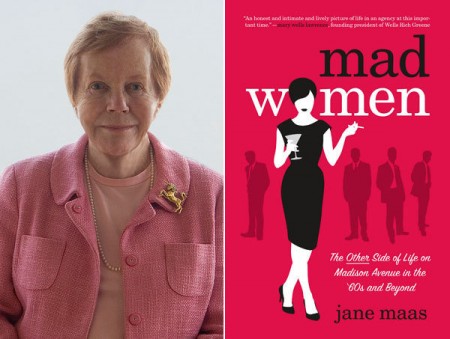
Book Review: Mad Women by Jane Maas

image

I absolutely loved this book. Every woman (and man) who loves Mad Men should read Mad Women by Jane Maas, which is about what it was actually like to be in advertising in the 60s. Jane Maas has great insights here because she began her career at Ogilvy & Mather as a copywriter in 1964 and climbed the ladder to creative director and agency officer. The book offers a ton of little stories and tidbits on what it was like to work at the agency and with David Ogilvy. Maas also ran her own agency, was a Matrix Award winner and an Advertising Woman of the Year, and if you have no idea who she is, think about the I Love New York campaign. Maas was the director of the campaign and shepherded it to greatness.

Mad Women is a book of anecdotes about Maas, the agencies of the 60s, career women and what’s accurate (and less so) in the tv series Mad Men. I thought the book was hilarious and intriguing. I mean it is a bit of bragging, but so what. Peggy Olson is a ringer for Maas, who rose through the ranks based on merits and managed some rather large accounts. The book is well written and if you’re at all interested in storytelling, it’s like having lunch with Maas and shooting the shit about the golden days of advertising.

The big takeaways: Career women seem to have all the same challenges today that they did in the 60s, although perhaps the discrepancies between men and women are more muted today than they were in the 60s. And advertising campaigns and their behind-the-scenes battles are pretty much the same.

Campaigns

Maas references a ton of great campaigns and the women behind them. For example, Clairol’s hair coloring. Coloring your hair in the 60s was a topic more personal than sex, mostly because only showgirls and hookers colored their hair. The woman behind Clairol’s “Does she … or doesn’t she?” slogan was Shirley Polykoff.

I Love New York is one of the most famous ad campaigns in history and many people claim to be the creator, but Maas was the liaison between the agency and the governor, the Department of Commerce, the state legislature, the regional tourism offices, the League of New York Theaters, the Statue of Liberty, the Baseball Hall of Fame, the Rockettes, the White House, and the Olympic Committee.

Mad Men: True or False

Was there much sex in the office? Joan Lipton, one of the grandes dames of advertising says “of course people were partaking, but you have to understand that at the time I was married, had a three-year-old child, and was living in Connecticut. In her interview Maas suggests then that Lipton was aware then of the sexual activity. “Aware?” Joan sniffed. “Heavens, I partook.”

Was there that much drinking? One account man complains to Jane, “it’s not at all realistic. We never drank in the morning.” Seems that it was customary to go out for lunch/liquid lunch most days. “We’d then have wine during lunch and a Rusty Nail (a combination of whisky and Drambuie) or Stinger (a lethal concoction of white creme de menthe and brandy) to finish. Then unbelievably, we’d all go back to our offices at about 2pm to work.”

From an Adage interview: Do you think Mad Men is accurate in its portrayal of women? Maas says “Yes, I do. For instance, Peggy Olson has a career path very similar to mine; she started off as a secretary and then got to writing copy by pleading, and then writing copy on nights and weekends until finally she was promoted to a copywriter. Still, a lot of her ideas are met with poo poo because the men think they know better. I think that’s very realistic in terms of how women copywriters were treated in those days — they were only allowed to work on certain types of products like baby food and things like that.”

The smoking: Maas recounts, “just an hour after my daughter Kate was born, a nurse brought this tiny 5lb infant to my hospital bed and I remember cradling her in one arm and smoking a cigarette with the other hand.”

The hats are missing: Women copywriters wore a hat all day long. It was a badge that signaled your position above the typing pool.

Stuff I Learned

1967: The teamwork school of creativity where the copywriters and art directors come up with ideas together was a new Doyle Dane Bernbach concept only recently implemented by agencies. Bill Bernbach decreed that at his agency, copywriters and art directors must work together on all advertising‚ even radio scripts. Maas, “We hear that at DDB some art directors can’t even draw. Imagine.”

The Schools of Advertising:
Quote: Doyle Dane school: tell it like it is, avoid hyperbole, have a little fun with the products. Ads like “Think small” for Volkswagen. “You don’t have to be Jewish to like Levy’s Jewish rye,” for a bakery in Brooklyn … and “We’re only #2. We try harder” for Avis.

David Ogilvy school: persuasive ads that often have long headlines and a lot of copy, packed with facts. One of DO’s most famous headlines was for Rolls-Royce, “the visual was simply a sleek photo of a car. The headline said: ‘At 60 miles an hour, the loudest noise in this new Rolls-Royce comes from the electric clock.'”

Ted Bates school: “hard-hitting, hard-selling advertising that drives the message home with powerful visuals and taglines repeated over and over. Hammers pounding on an animated head for Anacin; stomach acid bursting into flames for Tums. When people talk about how irritating advertising can be, it’s usually this kind of work they have in mind.”

Gene Grayson is a school unto himself. “He specializes in mnemonic devices‚ usually a visual effect that helps the consumer remember your brand and what it stands for. For Maxim freeze-dried coffee he created the slogan ‘Turns every cup in your house into a percolator.'”

To whet your appetite for mad women, listen to The Age of Persuasion on the great women of advertising. And do read Mad Women one. Totally fun and worth the ride.

Mad Women: The Other Side of Life on Madison Avenue in the ’60s and Beyond by Jane Maas
Published by St. Martin’s Press

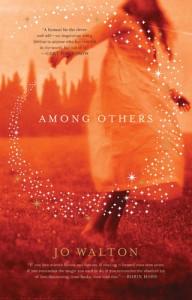
Book Review: Among Others by Jo Walton

image

Among Others by Jo Walton is a novel that got a lot of attention online and positive reviews. So much so that I thought I’d missed out and secured myself a copy. My basic summary is that it’s a novel written from the perspective of a 15-year-old Welsh girl in stream-of-consciousness diary entries. She extremely well read, especially in SF, and she can see fairies (unverified until the end when her boyfriend is also able to see them) and she uses magic sparingly to form protection charms against her witch mother (the witch status is also unverified until the end when mom throws fiery darts at our fearless narrator).

My issue with this book is that it’s a fantasy novel that’s not quite fantasy. It’s a British school girl novel, that’s not quite that either. And it’s a standalone novel (as far as I can tell) that reads like the middle book in a 3-book series. The best part of Among Others is that it compiles a fabulous list of science fiction and fantasy novels.

The book reviews and blurb quotes I think are overly effusive, and something that Mor (our narrator) rallies against when encountering a new book with title blurbs comparing the work to “Tolkien at his best.”

Among Others is about the love of reading, the magic of libraries and the reality that sometimes the world feels like it’s full of magic that you don’t quite understand and can’t quite control. I liked it, but it’s not a favourite and I disagree with all the rave reviews.

Book Review: The Book of Lost Fragrances by MJ Rose

image

The Book of Lost Fragrances: A Novel of Suspense peaked my interest because one of the main characters is a niche perfumer. Plus part of the promotional campaign included receiving a sample of a perfume mentioned in the book and there’s nothing I love more than a perfume sample. (Although, I never did receive a sample.)

MJ Rose is a well-known author and she does a great job researching her subjects. There were lots of little perfume factoids in the novel that were woven pretty nicely into the storyline.

The story is a mystery. Jac and Robbie are siblings and heirs to the L’Etoile line. Robbie is a practicing perfumer and Jac, who has the better nose, has left the business to pursue her career as a reality tv host of a show on mythology.

Robbie discovers an ancient Egyptian clay pot of perfume that he believes is a memory tool created by a L’Etoile ancestor. Jac‚ who regularly on her show finds proof of myths‚ refuses to believe the mythology of the L’Etoile ancestors developing a scent that would aid in memory, let alone provide insights into past lives.

But Robbie wholeheartedly believes this to be true, and as a Buddhist who believes in reincarnation, he wants to gift the clay pot of perfume to the Dalai Lama.

Chinese mobsters determined to prevent that transaction plus a famous psychologist who treats children suffering from past-life experiences are both independently seeking the memory tool. So when a dead man ends up in the L’Etoile workshop and Robbie is no where to be seen, it’s left to Jac to sniff out the truth.

I certainly liked this book because of the perfume references but this type of mystery isn’t my favourite genre. It lacks the refinement of Louise Penny’s A Trick of Light, which I greatly enjoyed. But, it was still a pretty fun read.

See what other people on Goodreads say.

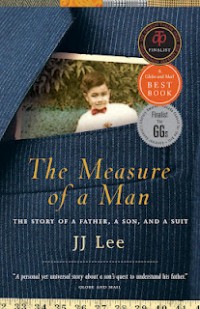
Book Review: The Measure of a Man by JJ Lee

image

I recently read The Measure of a Man: The Story of a Father, a Son, and a Suit as part of the Vancouver Sun Book Club and was deeply impressed with JJ Lee’s ability to weave his personal story with the history of menswear. In books where there are two parallel stories, I often find that they do run parallel and I favour one over the other, but here the two are interconnected in a way that moves both stories along nicely.

The Measure of a Man is great for women readers who are interested in a memoir about family relationships as well as curious about men’s fashion. JJ offers lots of little insights into why certain buttons are buttoned or not buttoned and where women go wrong in “helping” men with their wardrobe. And it’s great for men who might be drawn to the sartorial education provided in the pages but also curious about how the suit makes the man and how the anxieties of trying to measure up or measure yourself against your father are faced in this particular story.

The opening of this memoir is a great setup to the story. Perhaps it’s because JJ Lee is so practiced at telling this story. He tailored it first to be a radio documentary and also a series of talks, including this one I attended at Interesting Vancouver.

JJ Lee @Interesting Vancouver 2010 from Interesting Vancouver on Vimeo.

Just like the suit JJ is breaking down and restructuring, the memories of his father are like suit seams being sewn and ripped and sewn again.

The Meaning of a Man

Quote: As the suit has evolved over the last four centuries, moving from the tailcoat and morning coat (both short in the front and long in the back) to the long-skirted frock coat (imagine Abraham Lincoln) to the lounge suit (essentially our modern-day suit), it has accumulated layers of meaning, signifying different things to different people at different times. The suit has baggage. It carries the weight of male history and shifting ideas of manhood and fatherhood, success and failure, class and beauty.

From birthday suit to funeral suit, Lee uses his father’s suit to talk about what makes a man, specifically what made his father who he is and what makes JJ Lee who he is today.

During our Vancouver Sun live chat on March 16, JJ said:

Quote: It’s a weird book in some ways. Many people see it a fashion book and others see it as a family memoir but I suppose my point was the sartorial lessons are part of the male relationship and that it has its echoes through history.

Early on in the story, JJ Lee introduces readers to his father, who was raised by grandparents in Sherbrooke, married young and became a successful restaurant owner. JJ’s father worked hard for his place in the world. “Even then he liked clothes and was searching for how clothes could make the man. I see his ambition.”

But things bottom out for the Lee family when JJ’s father starts drinking too much, starts abusing his wife and the children, and then loses the house after a series of failed business ventures.

As we get deeper into the book, Lee’s nerve to tackle the suit matches the determination he’s mustered to tackle the memories of his father. And they are not at all good.

Quote: I’ve burrowed the blade deep enough into the seam to begin cutting the threads, which offer the same meaty resistance as when I slide a knife through the joint of a chicken thigh. Inside I find more of the alarming spewing guts of the suit: thin wafters of synthetic material are stacked to make the shoulder pad.

The suit might look good to the non-tailor, but a true tailor can see its faults. The sloppiness. The falsities trumped up so that together they appear to be greater than they are. The suit offers a wonderful metaphor for JJ’s memories of his father.

But it’s not a dower read. For example, in cutting out the bad in the suit, JJ makes a novice mistake. He’s taken out the shoulder padding and restitched the sleeves to the suit only to discover, “my head looks enormous.”

There’s an absurdity to the childhood memories that needs to be massaged into something more mature, something less distorted.

The Scent of a Man

Scent plays a strong role in JJ’s story. The suit itself smells of vanilla, cigarettes, and sweat. JJ Lee describes having a visceral reaction, a flood of memory. Perhaps my interest in perfume sold me on Measure of a Man.

Quote: In A Natural History of the Senses Diane Ackerman writes, ‘Nothing is more memorable than a smell. One scent can be unexpected, momentary and fleeting, yet conjure up a childhood summer beside a lake in the mountains; another, a moonlit beach; a third, a family dinner of pot roast and sweet potatoes during a myrtle-mad August in a Midwestern town. Smells detonate softly in our memory like poignant land mines hidden under the weedy mass of years. Hit a tripwire of smell and memories explode all at once. A complex vision leaps out of the undergrowth.’

On trying to gather pieces of knowledge and stitch them together, JJ says:

Quote: I will map its terrain; lapels, notches, side pockets, buttons, sleeves, die seams, and vents will be its features. Some I will alter. Others I will leave along. And maybe, like a construction crew trying to get a job done in Jerusalem, I will stumble upon the ruins of my father and they will tell me something about out downfall, the tumult he brought upon himself, our family, and me.

Lee is not cut out to be a tailor but he’s a good storyteller.

During his first foray as apprentice with Bill Wong of Modernize Tailors (still operating in Vancouver), JJ Lee is instructed to sew a set of parallel lines then turn the material around 90 degrees and stop the machine when he reaches a line. Bill quickly shoos JJ off the machine and in expert fashion writes “JJ Learn to Sew” in perfect cursive over-stitching. I love it.

Much of the sartorial education JJ shares with us in the book is on the history of the suit, the right way to wear a suit and the prominence or decline of particular suit designs.

For example, a true tailor will call the turning of the lapel from the inside out the “roll.” Done properly, labels don’t fold, they roll out, blooming like a flower petal. “They are wool labia opening out with an irresistible lushness”. It’s fascinating to think of the suit, with its start as a suit of armour, having a feminine opening, which is usually adorn with phallic shaped tie.

So lets talk about manly men! JJ recounts The Beatles debut on the Ed Sullivan Show in February 1964 and how it was also a debut of The Beatles iconic suits. The strong diagonals of the lapels, the shirt collars, the narrow ties that matched the dynamism and energy of the music and the men themselves. JJ has a way of making fashion iconic just in his recollections of sartorial moments in history.

Midway through we’re introduced to a series of famous tailors, including David Wilkes, who is an anomaly because he went to school to be a tailor. Raised in Dartmouth, NS, David wanted to be a tailor since he was fourteen. He enrolled in Dalhousie’s costume design program then after graduating continued to apprentice through autodidactic means using manuscripts and works from as early as the 1700s. (Darren: Sounds like something you’d do.)

In addition, there’s Hedi Slimane who in 1997 became the head designer for Yves Saint Laurent’s ready-to-wear line for men called Rive Gauche and moved men’s fashion from the Armani cut (big and blousey in the front with the tight bottom in back) to the narrow shoulders and slimmed down cut of today.

And each of these tailors and suit designs play into JJ’s recollections of what was in his father’s wardrobe and how his father sized him up and found him wanting, and how JJ sized up his father and found him wanting as well.

What’s in the closet comes out in JJ’s tales of abuse at the hands of his drunken father but the memoir doesn’t end on a sour note. JJ uses architect Robert Venturi’s criticism of modern architecture in his 1966 work Complexity and Contradiction in Architecture to suggest that he too can adopt a “Both And” perspective. Venturi’s Both And phenomenon suggested that a building detail could be both good and awkward, big and little, closed and open, continuous and articulated …

Quote: My father’s suit can be my Mannerist edifice. It will remain Both-And. It doesn’t have to be perfect, it just has to be something of my father that is also for me.

Suits are like bras

Part way through JJ’s explanation of the lost approach men take to the suit, I realized that this is much like approach many women take to bra shopping.

JJ reminisces about how a man used to take his a son to a tailor for his first suit. Through the fitting, the boy learned about the shape of lapels, the cut of the jacket, the collar, and what worked for him. Without this early lesson, he is lost to find his fit later in life.

Seems much like girls going for their first bra fitting. This was likewise a more formal affair than it is today, which is probably why so many women wear bras that are ill-fitting and, like a suit gone wrong, look terrible to the trained eye.

Stitching It All Together

As we near the end of the exploration of the suit, and fathers and sons, JJ realizes that the suit is what it is. That the suit can be Both And is an acceptance of his relationship with his father and an understanding that the measure of a man does not have to be against his father.

I like that the story ends with JJ Lee completing the suit. I don’t think it’s a spoiler to say that, surely you too were hoping for a happy ending.

There is only the circle made by a tailor’s hand as he quietly pulls the thread that connects all the parts together.

A fantastic job, well done JJ Lee. Oh, and JJ says to watch for red jeans, they’re going to be all the rage.

« Older posts Newer posts »

© 2026 So Misguided

Theme by Anders Noren — Up ↑