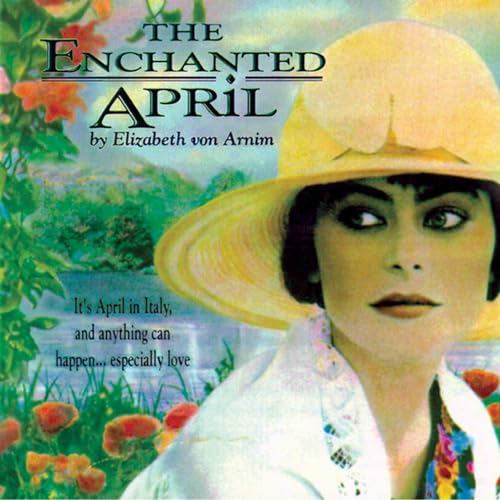
The Enchanted April is a charming book set in the 1920s about four women who decide to lease a medieval castle in San Salvatore, Italy. Mrs. Wilkins and Mrs. Arbuthnot are at their ladies club one dreary London day when they both spot an advertisement about an Italian castle for rent and the beautiful wisteria and sunshine to be had during the month of April.
Mrs. Wilkins is the wife of a solicitor and simply cannot be the good wife any longer. She is fed up. Mrs. Arbuthnot is the wife of an author, whose books would not be seen well in the eyes of God, and this bothers her very much. For different reasons, these two strangers agree to write to the owner to inquire about the cost.
The response is quite a bit more than they anticipated and although Mrs. Wilkins has been hiding a nest egg from her husband, and Mrs. Arbuthnot’s husband will willingly give her the money, the two decide that they should invite more women to join.
Four very different women, each desiring an escape from their lives, arrive to a delightful castle and are pleased to find the wisteria, as described, and the sunshine as promised. All of them, except for Mrs. Wilkins, who instigated the whole thing, are reticent to give into themselves. The elderly Mrs. Fisher wishes to remain a crusty old bat. The bewitchingly beautiful Lady Caroline wishes to hide herself from everyone. Mrs. Arbuthnot is determined not to accept how much she wants her husband’s affections. And dear Mrs. Wilkins, who desperately needed to escape her demanding husband, finds on day one that she must invite him to join her because it is just too lovely to not share. She thinks she was a “mean, old dog” for wanting to get away.
There are many laughable moments, and it is a charming novel. It was published in 1922 and is surprisingly relevant today. These are four women who learn to strip away their old habits so they can enjoy themselves. Being in nature and surrounded by its beauty is restorative. They are liberated from men, their friends and family, and societal expectations. It’s freedom they didn’t know they needed. And sharing the space leads to transformative friendships that would not have otherwise formed.
I heard about this book from a North Vancouver librarian and am pleased that I picked it up. I see there was a movie made a few years ago, and the book has been revived through several editions. Although this is not Regency England, it has a Jane Austen vibe so if you like Austen then give this a read. Or if you were a fan of Eat Pray Love this has a similar vibe of women escaping unhappy or stifled circumstances, and using Italy (or travel) as a catalyst for healing.