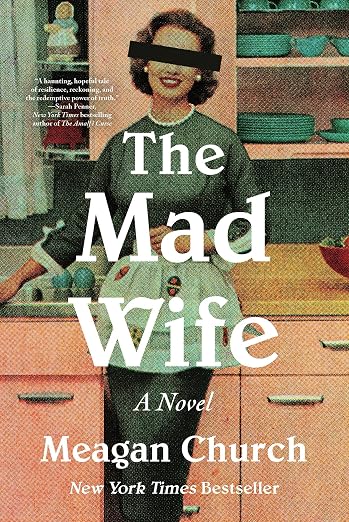
The Mad Wife is billed as a psychological historical fiction. It’s not really a psychological thriller but there is some uncertainty about the fallibility of the narrator. This is the story off Lulu Mayfield, a 1950s mother and housewife who is struggling with a newborn and 5 year old. The expectations and suburban rigidity of her life is killing her. The ladies on the block all grocery shop on one day, have a cleaning schedule they adhere to religiously, and all have husbands who are absent at work and expect the perfect life at home: drinks ready after work, table set, home-cooked meal, dishes and laundry down, quiet well-behaved children, and admiration from the neighbours. Perfect is hard to do when you have (unrecognized) postpartum depression.
Lulu was raised on a farm and feels penned in by the limitations of her life. She doesn’t follow the cleaning or shopping schedule, and initially it seems like quiet rebellion but as insomnia and dark thoughts grip her, the question becomes whether she’s postpartum or slipping into a deeper mental health crisis.
The twist here is that, before being sent away to get her nerves in order, Lulu has become fixated on Bitsy, who’s just moved in across the street. Bitsy is dour but welcomed easily into the fold by Lulu’s friend Nora. As Lulu investigates the new neighbours, Bitsy’s husband endears himself to Lulu’s husband. They work for the same architect firm. He wants a good word put in from him. They are both vying for the same promotion. But this man is the fox in the henhouse as far as Lulu is concerned. When she discovers Bitsy was given a lobotomy, approved by her husband, the tides turn in how she relates to Bitsy.
The challenge in this read is that what we understand today was not recognized in the 50s. Lulu’s doctor dismisses her postpartum struggles and diagnoses hysteria. He prescribes pills, the defacto way to return an obedient wife to her husband, and eventually it escalates to Lulu being institutionalized. The question is how far will Lulu’s husband go to re-establish his ideal household.
If you like The Bell Jar by Sylvia Plath, this is a modern writer casting back to the 1950s domestic gaslighting many women faced.