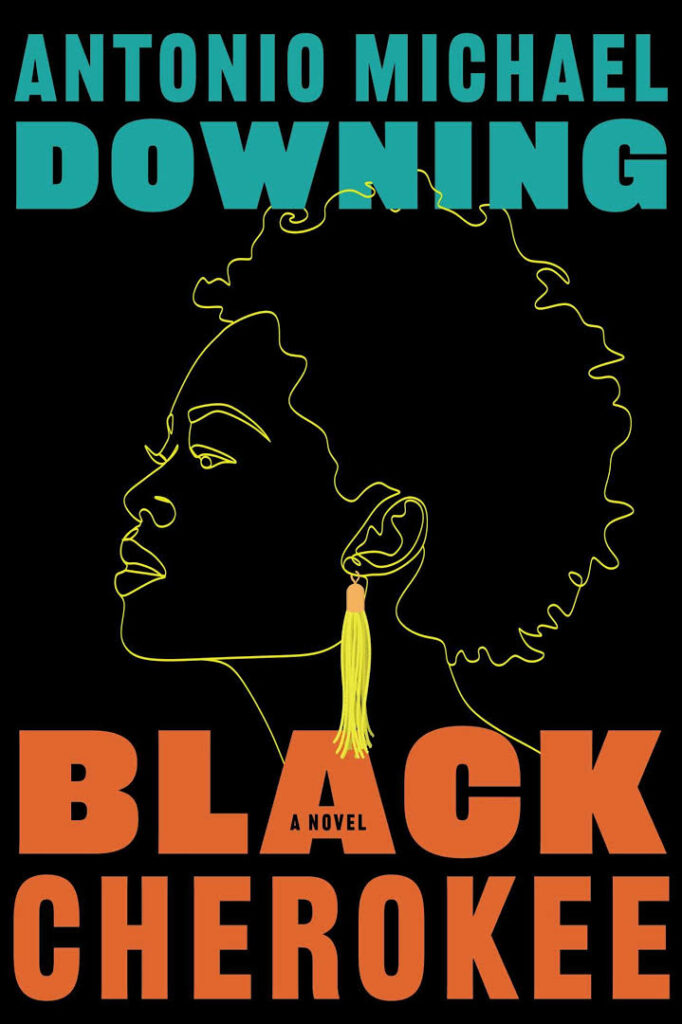
Black Cherokee by Antonio Michael Downing is a story about resilience. Set in the 1990s, Ophelia Blue Rivers is left to be raised by her Black grandmother, who is the widow of a Cherokee Chief and the descendant of the first freed Black woman in South Carolina. Grandma Blue is no nonsense and Ophelia has her head in the clouds. But the two manage just fine until Ophelia is old enough to go to school. Her Black-Cherokee mix makes her the target of bullies at the Cherokee school. She is moved to Stone River to live with an aunty through high school, but her Black-Cherokee mix makes her to target of bullies at the all Black high school. She manages a bit better in the gifted program at the primarily white high school, but finds herself falling in love with a white boy, much to the chagrin of her family.
At every turn, Ophelia is left to wonder what family means to her, and how she will create a sense of belonging.
Antonio Michael Downing is the host of CBC’s radio program The Next Chapter. This is his debut novel and I hope it’s not his last. The writing is fresh and spirited. Ophelia is complex, Grandma Blue–who’s short on words–is even more complex. The book has some Toni Morrison vibes. Morrison’s debut The Bluest Eye explored the psychological effects of internalized racism on a young Black girl in the 1940s. With Ophelia, we see the modern-day (1990s–yet very-present effects) of race and identity on one girl’s coming-of-age journey.
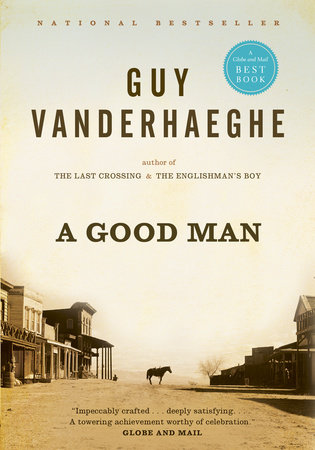
A Good Man is a solid Canadian western set in the late 1870s in the Canadian and American West, specifically around the border between present-day Montana and BC, Alberta, Saskatchewan. Not only is this an amazing western, but it’s also a political, historical novel about nationhood.
This period of time was full of crazy upheaval and the novel explores the political tensions as well as the personal dynamics between a few key characters.
Wesley Case, our main protagonist, is a former solider and the son of a Canadian lumber baron. Case leaves the North-West Mounted Police and, defying his father’s request to enter politics, settles in the American West as a cattle rancher. Case acts as a liaison between his former Canadian boss Major Walsh and the American counterpart Major Ilges. There are several unresolved conflicts between the Sioux and the Americans, the Fenians are still looking for independence from the British and making trouble in Canada, the American Civil War has technically ended in 1865 but there’s the general anxiety that the Americans now can turn their attention to Canada, plus there’s the commonplace violence between settlers staking claims and stealing claims. It’s a time of alliance building amidst mistrust.
Within the personal stories, we have similar tensions and alliances, especially love triangles, friendship triangles, and collegial triangles. The most satisfying being that between Mrs. Ada Tarr, Wesley Case and Joe McMullen. Case and McMullen met in the police and Case convinced McMullen to join him in starting the ranch. Case was the money man and McMullen had the needed skills and experience. They have the strong friendship of frontier men who sweat side by side during the day and get under each other’s skin at night. Mrs. Ada Tarr is the object of their affections, although it’s clear Case’s are romantic and McMullen’s are platonic. They are a dynamite trio.
Contrary to that is the triangle of Ada, Case and Michael Dunne. Dunne is a hired hitman, initially working for Ada’s husband, lawyer Randolph Tarr. (There’s another set of trios: Randolph, Ada, Dunne and Randolph, Dunne and Gobbler Johnson.) Tarr has failed to properly help Gobbler Johnson win a property claim and Gobbler has taken to giving Tarr death threats. Tarr hires Dunne to take care of it. In the duration of that contract, Dunne falls for Ada’s kindness, which he misinterprets as love interest on her part. So when Tarr dies, Dunne thinks Ada is now free to love him. It more than raises Dunne’s ire to learn that Case has swooped in on his beloved.
The plot is slow in unfolding, but it’s against the backdrop of the complex and slowly unfolding political tribulations Case, Walsh, and Ilges are observing between their governments and the various Indigenous communities being displaced from their traditional territories, starved, and shipped off to unfavourable reservations. The other triangle is Case, Walsh and Sitting Bull.
After defeating Colonel Custer at the Battle of Little Bighorn in 1876, Sitting Bull and the Hunkpapa Lakota crossed into Canada to escape the US forces hunting them down. The Canadian government was in a tricky position of not wanting to disrespect their stronger neighbour to the south but wanting to appear neutral. Major Walsh, at least in the novel, is quite sympathetic to Sitting Bull’s plight and does his utmost to feed and provide ammunition to the Indigenous people seeking safe harbour within Canadian borders (and, uh, on their own damn land anyway). But Walsh is ultimately forced to bend to his own government’s pressure to push Sitting Bull and his people back across the border to the US.
Yes, the book is a slow read but, my goodness, the skilled writing is worth it. If you like Cormac McCarthy, Jack Keroauc, or Kazuo Ishiguro, then you’ll love the intense style, bleak themes, and poetic prose of A Good Man.
Also, from a modern-day perspective, I don’t think many Canadians understand their history. Here are a couple of lowlight moments.
The American Civil War was fought from 1861-1865. The British Empire, including Canada, had been officially neutral in the American Civil War, but many in government aligned with the South. A “United” States was a more powerful neighbour than many wanted. [Micheal Dunne enters the story here as an everyman for a powerful Canadian who’s on the side of the Confederates.]
So Canada was a neutral but active base for Confederate spies, plots against political figures, and supply operations. We were trying to play both sides, in an attempt to reinforce Canadian independence and nationhood. Remember Canadian Confederation only happened in 1867, as a measure of collective security. The US had several policies aimed at pressuring Canada into political union with the US (sound familiar?). [Case’s early days as a solider highlight these tensions well; and set up a nice piece of blackmail that makes its way into Dunne’s hands later in the novel.]
Following the Civil War, the US continued to have armed conflicts between Indigenous warriors trying to defend their homelands and US forces pushing them off to make way for farming and industrial progress, mining, and the general stripping of resources in the name of settlement. [Case moves from eastern Canada to the wild west and we pick up the political story from there.]
Canada was doing the same. The Northwest Mounted Police formed in 1873 and was created to assert sovereignty and bring “law” to the western territories. They were a military-style force, crucial in policing settlers and aiding (strong-arming) treaty negotiations. We starved Indigenous communities into submission then introduced the Indian Act of 1876 as way to relieve Indigenous people of their self governance. [Walsh is hard-nosed and driven by passion. His allegiance to the British crown is in conflict with his personal alliance with Sitting Bull and this makes for an interesting third-act of the novel, especially as Case tries to act as an advisor to Walsh.]
Territorial dominance was a big deal.
The British Empire was also the hated enemy of the Fenian Brotherhood, an Irish-nationalist society, based in the US, that aimed to achieve Ireland’s independence from Britain by capturing Canadian territory and using it as leverage. There were a series of Fenian scares, armed incursions or raids into British North American during the time of this novel. In today’s secular society, it’s easy to forget that, predominantly Catholic, Irish people in Canada faced a hostile reception from the ruling class of British Protestants. [The anti-Catholic sentiment is subtly noted in the novel with a nod to the Orange Order, but the prejudice against the working class, and low-paid labour force, is clear throughout.]
So alliances, strong-arm tactics, and spying is at the heart of both the political and personal stories in A Good Man. The grit and historical depth of the times are presented in the frontier/violent landscape of the novel, making it an unforgettable story and deeply deserving of its accolades.
A Good Man is the last book in what critics call the frontier trilogy: The Englishman’s Boy (1996, Winner of the Governor General’s Award), The Last Crossing (2002, a CanadaReads winner), A Good Man (2011, a Globe and Mail Best Book).
Now, if you were forced to read The Englishman’s Boy in school, then you may, like me, have avoided reading any more Vanderhaeghe. But this book is so much better. Again, it’s slow. But it’s masterful. I picked it up because of the opening:
Thoughts of Mother early this evening. She came back to me complete, the memory like a fist slammed to the heart. Father always called her “the dragon without scales” to diminish her, but he was like the wolf blowing on the brick house of the third little pig. She did not tumble or collapse under his scorn, not once.
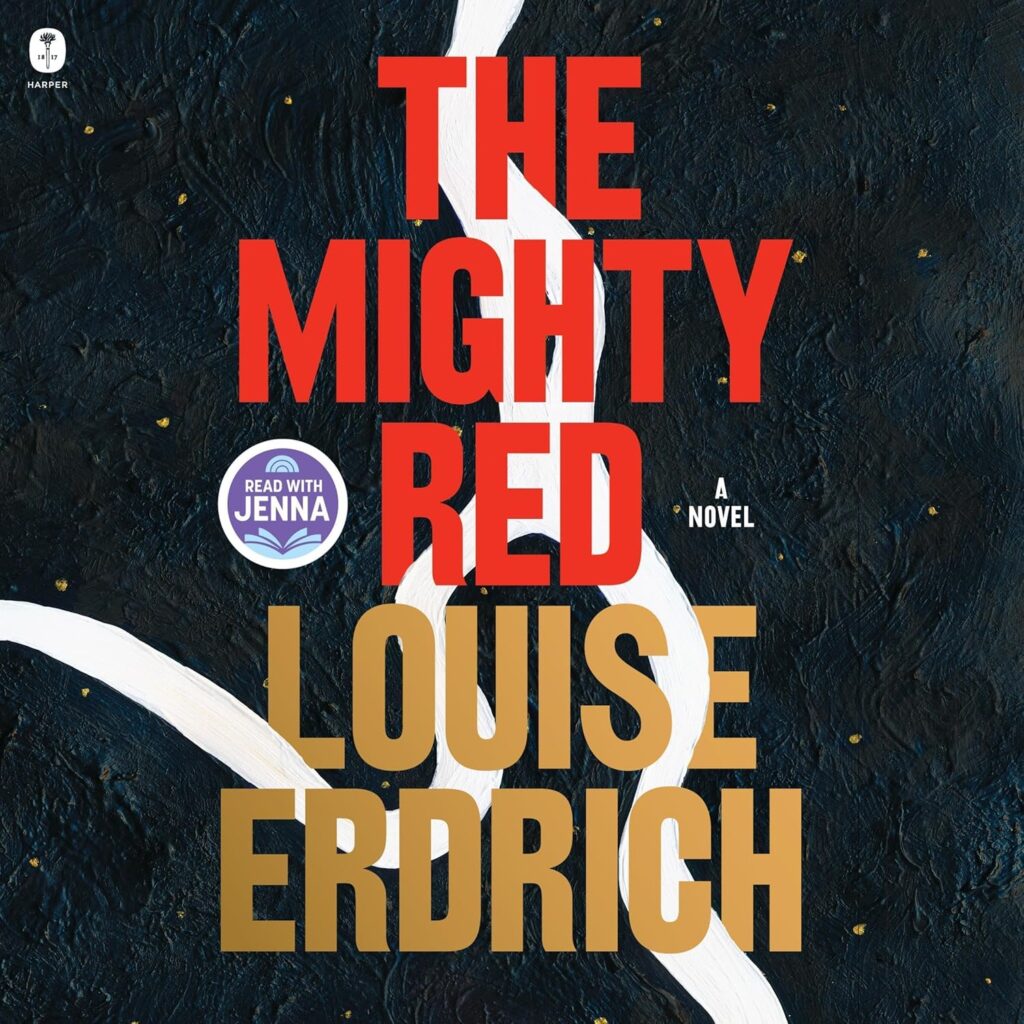
The Mighty Red is set in the farming community of Tabor, located in the Red River Valley. I grew up in Winnipeg, which is further north, but also along the Red. The Red River is a low-energy, suspended-sediment, mud-dominated, meandering stream. And so is this novel.
There’s no high-energy plot line here—although Martin, the failed drama teacher and investor, is assumed to have run off with the church renovation funds and appears to be operating small bank heists. This aspect of the story is tertiary to the main plot, which is the love triangle of teens Kismet, Hugo and Gary.
Kismet and Hugo are readers. They bond over their misfit status. Both are eager to move away and make something of themselves. Kismet is afraid. Hugo gives it a go but then retreats back to Tabor. They are like suspended sediment.
Gary, in contrast, is the well-liked football hero and heir to a successful sugar-beet farmer. But Gary isn’t that smart (not overtly smart, he does redeem himself later in the novel). Gary runs wild, has close calls, and his reckless behaviour leaves two friends dead. Gary’s family is well connected in the community but the lost of his friends and ostracization puts a lot of strain on him. The haunting ghost of his friend doesn’t help, but this doesn’t seem like a community with mental health supports. It’s Kismet who Gary believes is his talisman and he courts her with vigour until she agrees to marry him.
Kismet is a reluctant bride but she allows herself to be swept along and no adults step in to prevent the wedding, even though many, including her mother, wish to do so. It’s muddy waters.
I can’t really pin down what this novel is about. Is it about a girl who doesn’t want to get married, yet can’t convince herself to rise above her situation? Or is it about a girl who quietly triumphs despite the odds? Maybe both. There are interesting tensions throughout the novel between the Monsanto promise vs. natural farming practices; rich vs. poor families; extravagance vs. frugality; land ownership vs. rightful ownership. And like the Red River, sometimes the story spills over its banks but otherwise it meanders across a flat plain. Do I recommend it? Ugh, yes. I think I do. The characters feel genuine and their indecisions are real. There are no heroes here but there is a sense of triumph at the end.
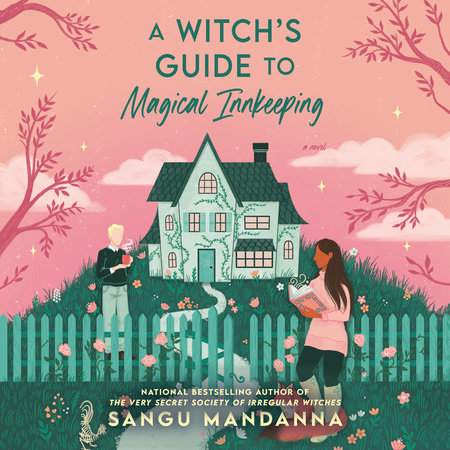
Absolutely delightful. Sera Swan is at the height of her magical powers when the one woman who has always protected her and made her feel loved drops dead in the garden. A talking fox coaches Sera on how to cast a forbidden resurrection spell. And of course, things go off the rails from there. Sera is able to resurrect her dear Great-Aunt Jasmine, but she unintentionally also brings back the long-buried pet chicken and saps all her magical powers. Sera has gone too far. She is outcast from the community of witches, she has the bare minimum magic left to keep her home and inn running, but she is tired and snarky all the time.
I listened to this audiobook and the narrator Samara MacLaren, who reminds me of Kiera Knightley, does a most-wonderful snarky and sarcastic voice.
Poor Sera has one, highly unlikely chance to get her magic back, but she is thwarted by her old rival and mentor at every turn. In the end she realizes that her life is more than just the magic, but it sure would be handy to get it back.
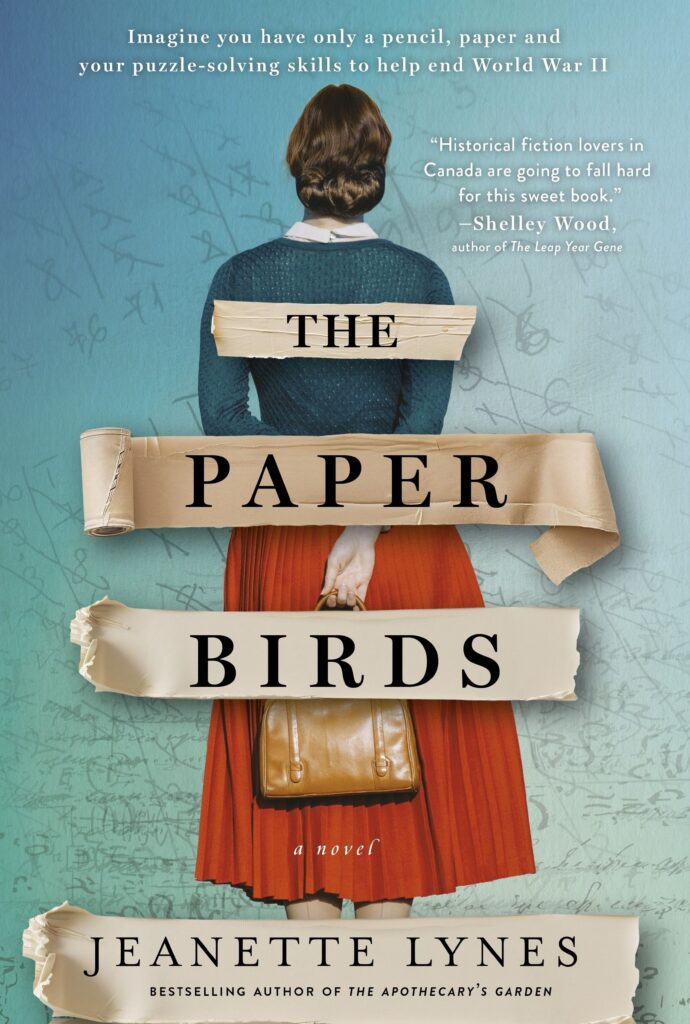
The Paper Birds by Jeanette Lynes is historical fiction, from a Canadian perspective. Many readers of WWII history will know about Camp X, a spy training facility near Whitby, Ontario. But they might not know about the prisoner-of-war camps in Canada, nor about the Canadian women who worked under the Official Secrets Act in small facilities and converted private homes.
This is the story of Gemma Sullivan who works in an “office” job in the summer of 1943, with 4 other women, working to break codes. They meet daily at the “Cottage” and are given intercepts to break, but they have none of the machinery of Whitby or the prestige of Bletchley Park. It’s just their pencils and wits. The women have diverse talents in mathematics, logic, and literature. But they don’t share much in common, which leads Gemma to wander off during a lunch break for some alone time. During her walk, she is led by a stray cat to the edges of a prisoner-of-war camp where she strikes up a conversation with a prisoner. Fraternizing with the enemy has steep penalties and, given her intelligence work, it could be very bad news for Gemma. But she is drawn over and over to the handsome prisoner at the fence.
The Paper Birds is a quiet love story. There are no big dramas here, just the underlying tension Gemma feels about all the lies and lives she is upholding through her job.
I was not familiar with Jeanette Lynes before but she’s a Canadian author and has several books that have won or been nominated for awards in both fiction and non-fiction. So I’m keen to find more of her work.
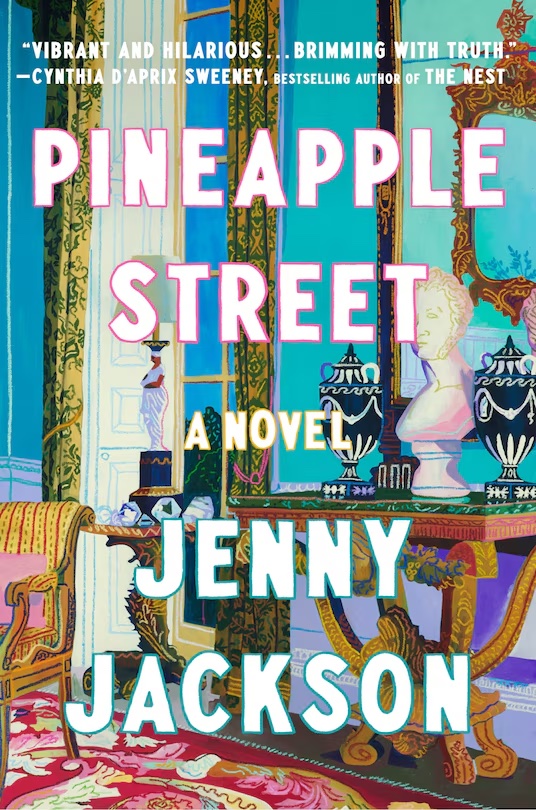
Pineapple Street is a novel about generational wealth and how it affects the children of one particular family. The story is told from multiple perspectives: Darley, the eldest daughter who has traded her job and inheritance to raise a family with her Asian husband Malcolm; Cord, the prodigal son who is taking over the family real estate business and is married to middle-class Sasha, who is an artist and designer; then Georgiana, the youngest who is working in a non-profit while being weirdly tied to her wealthy friends and care-free lifestyle. Each of them has their privilege challenged in different ways, and although it’s not a wholly redemptive story it is a fun looky-loo at the upper, upper class.
I’m not sure the book stands up to its accolades but there are moments of cringe humour and a nod to Henry James and Jane Austen novels, in particular the focus on social commentary, especially in terms of the women in the novel and how they navigate marriage and social expectations. There is wit here too. It’s not a terrible book but I think it benefited from being written by a publishing insider and, whether intentional or not, that is its own meta commentary on wealth and privilege.
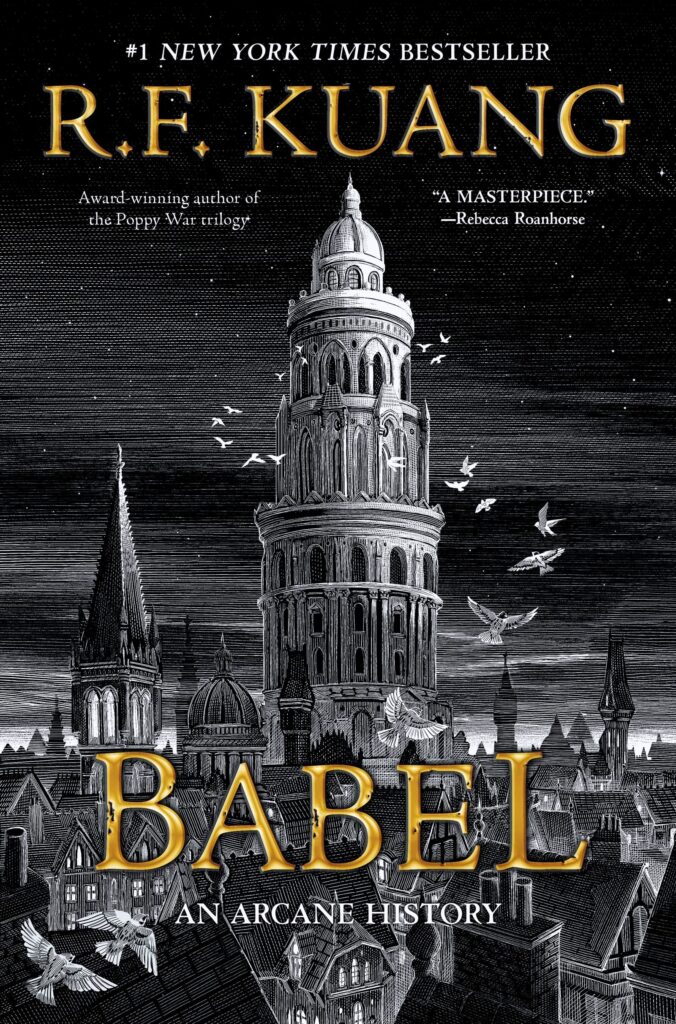
The author of The Poppy War delivers yet another stunning fantasy novel about treachery, magic, and empire building. In Babel, we find ourselves in 1830s Oxford, specifically at the prestigious Royal Institute of Translation, a.k.a. Babel. The role of Babel is to provide translations services to the British Empire, but more important silver working. In this fantastical version of England, the county and its colonies is run on a magical process of manifesting the meaning of two words into something more powerful. Match pairs like the Chinese word “wúxíng” and the English word “invisible” can be uttered by a bilingual speaker to make themselves invisible. Pairing the word “speed” with its Latin root “spes” can magically enhance the speed of a vehicle.
The British Empire has great need for translators who can discover more and more match pairs to make looms run on their own, to keep carts on the road, to strengthen their battleships or hone in on their targets. To that end, young Robin Swift is plucked from his home in Canton by Professor Lovell and trained in Latin, Ancient Greek and Chinese, with the end goal being that he join Babel and serve the Empire.
Robin is not alone. His cohort includes Ramy from Pakistan, Victoire from Haiti, and Letty Price, a lovely British rose who is adept at languages but will never be the son her father wanted. The four are each wowed by their privilege but Robin soon discovers a darker side to Babel. He meets his half-brother Griffin who is part of an underground resistance movement. Robin is suddenly caught up in undermining Babel and his peers. He starts to see more clearly Britain’s exploitation of other cultures and the appropriation of their linguistic resources for its own gain. Will his classmates join him? Will he abandon the cause?
I can’t tell you too much without ruining various plot twists but I can say that the play of language throughout the book, the etymology of words, and the power of magic are all very enjoyable aspects of this book. The colonization, the prejudices, the disparities between those in power and those who must carry the burden are all too familiar elements of human history.
If you liked Jonathan Strange & Mr. Norrell then you’ll enjoy the power struggles in Babel. If you liked Poppy War, then you’ll like the heroics of this feisty group of young Babblers.
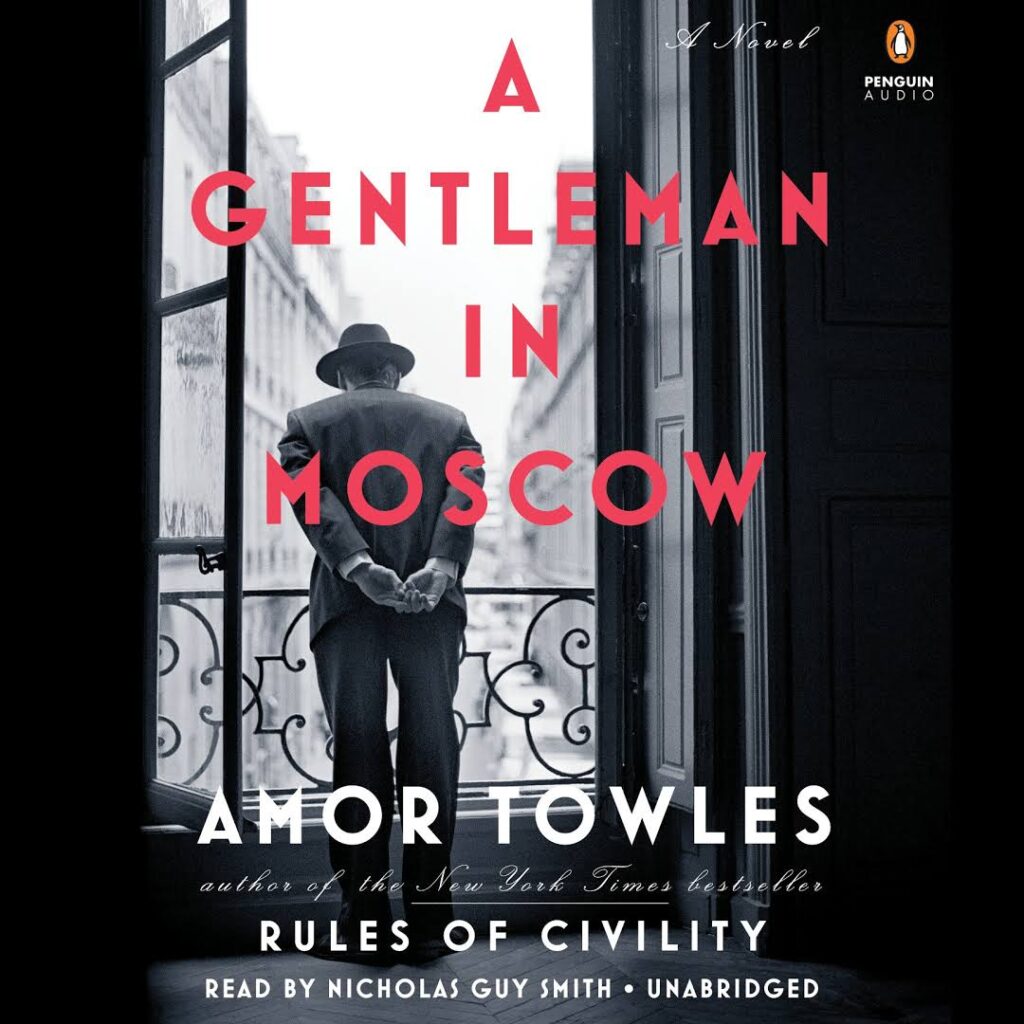
A Gentleman in Moscow is the story of Count Alexander Rostov, a Russian aristocrat, who is under house arrest in a luxury hotel. Count Rostov spends over 30 years in the grand hotel Metropol. His opulent rooms are swapped for a tight attic room. Most of his treasures are taken. But although his material circumstances are greatly reduced, he is rich with his knowledge of literature and culture, his friendships, and his understanding of Russian history.
The Count has some love affairs, he befriends a young girl who also lives in the hotel, he keeps regular appointments with the hotel’s barber, and he uses his ingenuity with seating charts to help the hotel’s maitre d’ manage the various Bolshevik leaders and foreign travellers who come to dine. The Count is someone the Bolsheviks want to discard but he becomes indispensable to the hotel and its staff.
The book is quiet, but that helps convey Count Rostov’s old-fashioned nature. It’s elegant and eloquent, as is the Count. And I’d say it is a novel about survival. So many things get toss out by new regimes. But Alexander Rostov represents the things best kept.
Blue Sisters is the story of four dysfunctional sisters who are struggling to bond after the death of their beloved sister Nicky. Avery is the eldest (a recovering heroin addict, now high-paid London lawyer), who took over as mother to the girls when their own mother checked out. Bonnie is the next sister (superstar boxer, now low-paid bouncer in LA), who is the peace maker of the sisters. And Lucky is the youngest (a supermodel living in Paris, addicted to partying, alcohol and drugs), who is not sure who she is or what she actually wants to do. All three are lost without Nicky.
This is a story about coping with grief and coming to terms with the disappointments they each faced in childhood and young adulthood. Avery took on a mother role then escaped the family home as soon as she could. She lets her unexplored feelings destroy the life she’s built in London. Bonnie was the fighter and had the attention of their alcoholic father until she escaped into the ring but her unvoiced affections for her trainer and her loyalty to her sisters means that she drops her opportunities in favour of saving her sisters from themselves. And Lucky is still a child. Her modelling started when she was just a teen and she’s never had to grow up. She looks sophisticated in photos but really doesn’t want to be in the spotlight and distances herself from relationships as a protective strategy. Nicky connected the sisters. She was the best-loved by their parents and had a special bond with each sister. The linch pin was pulled with Nicky’s death and the three remaining sisters are left to figure out if they fit back together as a threesome and if there’s any room for a mother figure.
Overall I liked this book. There’s a good bit of humour and head scratching. Each sister is unlikeable in their own way, which can make this read a slog. But I enjoyed how the chapters alternate between their perspectives and I liked that the ending was not what I expected.
If you like the tv series Bad Sisters, this isn’t as crazy but it has all the wild dynamics of sisterhood.
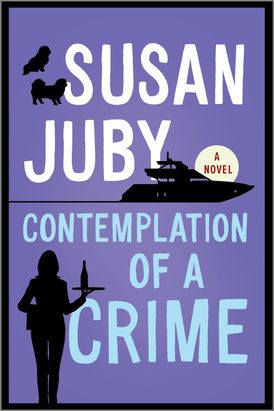
What a lark! Butler and former Buddhist nun Helen Thorpe is yet again forced to play detective. This time she is compelled by her philanthropic employer Mr. Levine to join him as a participant in a group called Close Encounters for Global Healing. The group is run by Mr. Levine’s son David, who is in a bit of a bind. The group is meant to bring together a diverse set of participants who go through a series of exercises that help them find common ground. The “wealthy” person has bowed out and David needs a stand in, but nobody can know that the stand in is his father. Helen goes along for reassurance and security, since Mr. Levine is actually ultra-rich and needs a butler—that said, he is ultra kind, but still should not really be unattended in public settings. But Benedict Levine wants to see what his son loves about facilitating this workshop.
Turns out that the participants are unlikely to find common ground. There’s a burnt-out environmental activist who is down about everything, an internet troll who is a vile teen, a clued-out shopaholic, a white nationalist who claims he was just trying to get his girlfriend’s approval, and a dude arrested for his participation in the Freedom Convoy in Ottawa. The warring and bickering starts immediately and doesn’t end until two people go missing. Now poor Helen is left to figure out a plan. Thankfully her handy butler friends, Gavin, Murray and Nigel, are on hand to lend a hand.
Susan Juby’s writing is so masterful and funny. This is book #3 in the series and the quirks of Helen Thorpe are as delightful as book #1 and book #2. I hope there’s another Helen Thorpe mystery in her pocket.