Plain words, uncommon sense

Category: Book Reviews (Page 33 of 45)

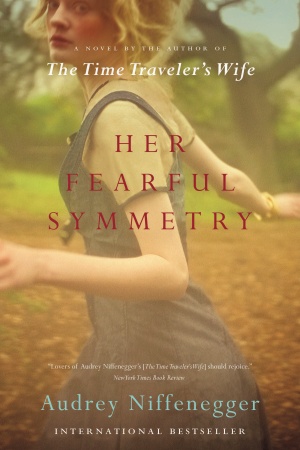
Book Review: Her Fearful Symmetry

image

Fans of The Time Traveler’s Wife will not be disappointed by Audrey Niffenegger’s latest novel Her Fearful Symmetry.

Julia and Valentine Poole are 20-year-old sisters who are mirror twins. They are identical but also mirror images of each other. Valentina’s organs are even in the wrong spots. The twins are the daughter of a twin and the story opens with them inheriting the aunt’s apartment in London.

The English aunt, Elspeth, has very specific instructions. The girls must live in the flat for 1 year before selling it and under no circumstances is their mother Edwina to enter the apartment.

The flat borders the vast Highgate Cemetery, where Robert, Elspeth’s lover works. He also happens to live in the flat below theirs.

To say the least, without giving things away, this is a modern-day ghost story with twins. Smart, eerie and a nice page turner.

Her Fearful Symmetry by Audrey Niffenegger
Published by Vintage Canada
Read an Excerpt

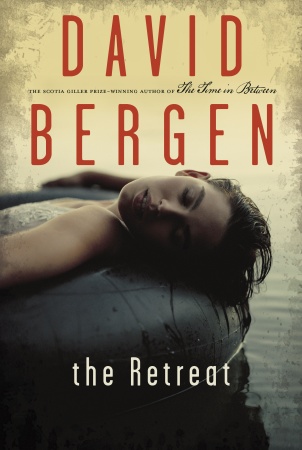
Book Review: The Retreat by David Bergen

image

One of the best books I read this year is The Retreat by David Bergen. Bergen hails from Winnipeg and The Retreat is set close to there in an area that I know well, Lake of the Woods.

It’s 1974, during the summer of the Ojibway occupation of Anicinabe Park in Kenora, Ontario. Raymond is a native boy who falls in love with a white girl whose uncle is in the police force. The family is not keen on their relationship and manage to drive them apart (quite literally). Raymond later meets Lizzy Byrd, who is holidaying at Lake of the Woods at “The Retreat”, a commune run by a woo-woo guru named Dr. Amos. Lizzy’s mother is a fan of Dr. Amos. Lizzy’s father is not, but in an effort to satisfy his wife, he’s brought the family here for the summer.

The summer is a long period of time.

With a cast of characters at the Retreat, as well as the locals, Bergen’s weaves a multilayered story. Kids get lost and almost drown. Family’s break up, and come back together. Regardless of the storyline, each character is complete. Bergen’s characters aren’t two dimensional, even if they only have supporting roles.

The Retreat is a beautifully written novel. Each word finely crafts the story. I really, really enjoyed this book and think Bergen is as gifted as the critics claim (nominee 2008 – Scotiabank Giller Prize, winner 2009 – McNally Robinson Book of the Year, winner 2009 – Margaret Laurence Award for Fiction).
Read an excerpt.

The Retreat by David Bergen
Published by McClelland & Stewart

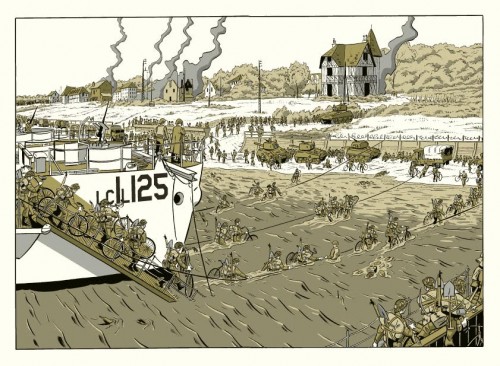
Book Review: Two Generals by Scott Chantler

Scott Chantler is an acclaimed graphic novelist who lives in Waterloo. And he draws in a style that I totally love for graphic novels. Apparently I’m not the only one who loves his stuff, Chantler’s books have been nominated for the Eisner, Harvey, Russ Manning, Joe Shuster, and Doug Wright Awards, and I don’t see why he didn’t win.

Two Generals is a graphic novel set during the Second World War. I think this is his ninth book, although there are only 5 books to buy in his store. Regardless of what number this book is, it’s worth buying.

The thing I love about Seth’s work is the packaging. There’s something about a graphic novel that deserves artistic attention. And I was really pleased to see the incredible package and designed for Chantler’s book (designed by Jennifer Lum at McClelland & Stewart).

In March 1943, Scott’s grandfather, Law Chantler, left Canada for active service with the Highland Light Infantry in England. Also on board was his best friend and fellow officer, Jack. After grueling training and weeks of boredom and anxiousness to get going, they were crossing the English Channel for the Allied invasion of Normandy. If you know your military history, you’ll know that this operation was fraught with difficulties.

The novel is a story of friendship and the absurdities of war rather than a straight account of events. And I enjoyed the subtleties of the illustrations, the side winks, the knowing glances and the quiet gestures that tell the emotional story of the lives of these two men.

Scott has also launched a research blog for Two Generals where you can view early sketches and also the photos and images that he used to inform this story and illustrations. I recommend having a look!

image

Two Generals by Scott Chantler
Published by McClelland & Stewart

Book Review: How to Live Safely in a Science Fictional Universe by Charles Yu

Certainly a weirdly good read. Charles Yu first came to my attention with Thrid Class Superhero, his collection of short stories. Now, he’s on the radar with How to Live Safely in a Science Fiction Universe, his debut novel.

image

Minor Universe 31 is a vast story-space with interconnected yet separate universes. It’s a time when time travel is something anyone can do, like microwaving food. People have a personal time travel device, which they mostly use to visit moments in the past that they want to relive–usually bad moments that they are hoping to change or from which they hope to gain insights.

Quote: The base model TM-31 [TM-31 Recreational Time Travel Device] runs on state-of-the-art chronodiegetical technology: a six-cylinder grammar drive built on a quad-core physic engine, which features an applied temporalinguistics architecture allowing for free-form navigation within a rendered environment, such as, for instance, a story space and, in particular, a science fictional universe.

A box. Get in. Push some buttons. Visit different times. The operating system is called TAMMY (or TIM–depending on what you chose at start up).

Charles Yu, time travel technician, saves people from themselves. Or rather, he fixes their time travel machines that break due to human tampering. But ultimately he ends up trapping himself in a time loop.

If you’re not a fan of science fiction, then this is a good literary spin on that genre. If you are a science fiction fan, I think you’ll enjoy the science and philosophy described in the novel.

1-line summary: This novel is The Big Bang Theory meets a dysfunctional Family Ties, without the laugh track, although there are some funny moments.

Clever. Geeky. Nostalgic. (Can you be nostalgic for the future? In a science fictional universe, I think you can be.)

Related Links

Charles Yu in the Huffington Post before finishing the novel.
Lev Grossman’s review of Science Fictional Universe on Amazon.com
Pantheon: US publisher
Pantheon: CDN publisher

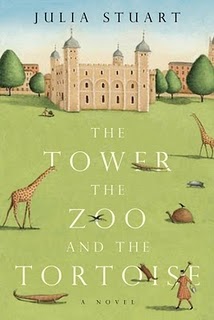
Book Review: The Tower, the Zoo and the Tortoise by Julia Stuart

image

The Tower, the Zoo and the Tortoise by Julia Stuart is a strange but lovely book about what happens at the Tower of London after the tourists go home.

I did not know that the employees of the Tower of London , the Beefeaters (or more correctly, the Yeoman Wardens) , their families, the reverend, landlady of the pub and Ravenmaster actually live within the walled village of the Tower. No one is allowed in or out between midnight and 6 am.

The main characters are Yeoman Warden Balthazar Jones and his Grecian wife Hebe Jones who have lost their son Milo and are adrift in their grief. Hebe works at the London Underground Lost Property Office, which supplies no end of curios to the storyline. Balthazar, through strange circumstances, becomes the Head of the Royal Menagerie. In his care are 4 giraffes, a raft of penguins, a stinky zorilla, an albatross, some cheeky monkeys, and among others, a stolen bearded pig.

Not quite a modern-day Greek tragedy, this novel is full of comedic drama, human vulnerabilities, follies and divine acts.

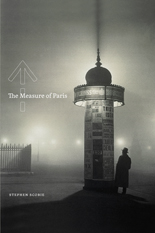
Book Review: Measure of Paris by Stephen Scobie

image
Measure of Paris by Stephen Scobie (published by the University of Alberta Press) is a travelogue, memoir, literary criticism and poetic look at Paris.

Quote: From the UofA site:
Paris remains one of the most fascinating cities in the world. It provides a measure of excellence in many areas of culture, and it is itself constantly being measured, both by its lovers and by its critics. This book presents a series of studies on the images of Paris presented by writers (mostly Canadian, from John Glassco to Mavis Gallant to Lola Lemire Tostevin), but also in such other areas as social history and personal memoir. The result is a wide-ranging discussion of the city’s history in 20th century literature and thought, which will appeal to all those who love Paris, or who have ever walked on its streets.

Scobie is the ultimate flaneur and his philosophical meanderings through Paris takes readers to sites of art, architecture and transit. His history of the city planning, and the itineraries of Canadian writers in Paris, makes for interesting reading and a different look at a city that is larger than life.

His personal musings were my favourite, along with the insights into Haussman’s influence and transformation of Paris through the large-scale construction of the streets and boulevards that make the Paris we know today.

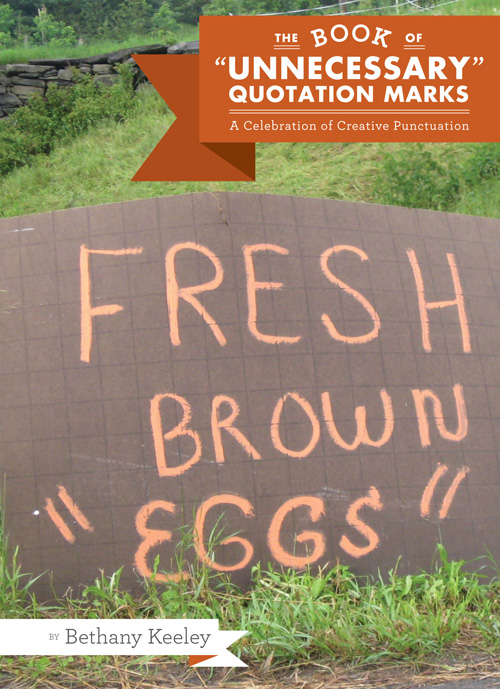
Book Review: The Book of “Unnecessary” Quotation Marks by Bethany Keeley

James and I often rant about unnecessary quotation marks. “Who is being quoted,” is our common refrain.

Bethany Keeley took her curiosity about this phenomenon to new heights and after years of blogging, compile the best examples into The Book of “Unnecessary” Quotation Marks. (Guest post by Bethany on the Chronicle Books blog.)

When quotation and attribution is unnecessary

According to the Chicago Manual of Style, “commonly known or readily verifiable facts, proverbs, and other familiar expressions can be stated without quotation or attribution unless the wording is taken directly from another source.”

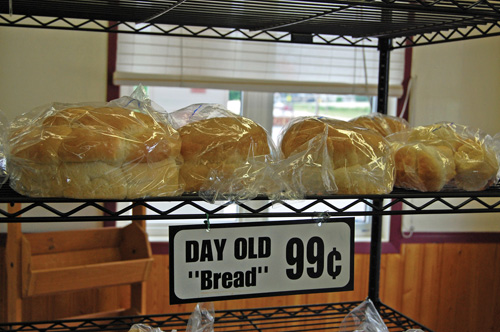
Which makes me wonder, what unverifiable fact makes a “hamburger” and to whom are we attributing “live” lobsters?

image

I don’t trust the editorial wisdom of Wikipedia, but according to the masses, common use for quotation marks is apparently “to call attention to ironic or apologetic words.”

Day Old “Bread”
Ironic or apologetic?
Unverifiable fact?
Unfamiliar expression?

image

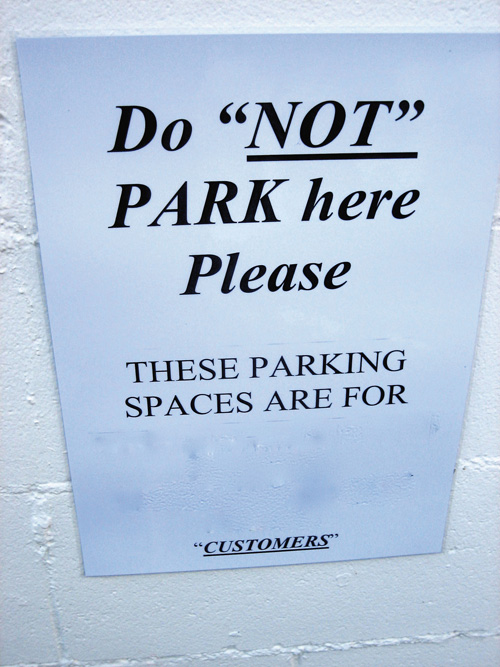
I love the quotation use in this one:

Do “NOT”
PARK here
Please

THESE PARKING SPACES ARE FOR
“CUSTOMERS”

image

Are we calling attention to the irony that this place has customers? Perhaps it’s all just apologetic.

Bethany Keeley’s The Book of “Unnecessary” Quotation Marks is a collection of photographs of signs in stores, offices, streets and “facilities” making interesting use of our favourite punctuation mark.

image

And just because quotation marks can be so confounding. Here is some fun with single and double quotation marks.

Quote: “Don’t be absurd!” said Henry. “To say that‚ ‘I mean what I say’ is the same as‚ ‘I say what I mean’ is to be as confused as Alice at the Mad Hatter’s tea party. You remember what the Hatter said to her: ‘Not the same thing a bit! Why you might just as well say that “I see what I eat” is the same thing as “I eat what I see”!’ ”

The Book of “Unnecessary” Quotation Marks by Bethany Keeley
Published by Chronicle Books
Distributed in Canada by
Raincoast Books

Book Review: The Group by Mary McCarthy

Mary McCarthy’s most celebrated novel follows the lives of eight Vassar graduates (Class of ’33), known simply to their classmates as “the group.”

image

The tangled stories of eight different lives are united by the pivotal figure of Kay Strong–the first of the group to break from the traditions of society by getting married without parental guidance.

The social history presented here, pre-World War II, is equal in period quality to that presented in the tv show Mad Men (if not moreso).

The girls are all middle-class or upper-middle class, growing up during a revolutionary period in American life where women are forming an identity beyond their social class, beyond their parent’s social aspirations.

They work outside the home, they travel abroad alone, they philosophize, they use birth control, they buy this new thing called margarine.

All eight are in some way breaking with the past and forging a new status quo while at the same time falling into prescribed roles.

The language choice is striking and the novel’s structure of twists and turns reveals layers of insights into each character through the commentary and interior monologues of other characters.

McCarthy’s novel was published in 1963, thirty years after the time described in the novel, but the picture she paints of the times seems complete as well as insightful. (I particularly enjoyed the incredibly rich word choice and complex sentence structure. This is a novel written in a different time and its structure is reflective of the times represented.)

Quote: It was plain to Polly that many of her married classmates were disappointed in their husbands and envied the girls, like Helena, who had not got married. In June the class would have its fifth reunion and already it had its first divorcees. These hares were discussed wistfully by the tortoises of the class. It was felt that they at least had ‘done something.’ Norine Blake’s divorce, she had gone to a ranch outside Reno and now called herself ‘Mrs. Schmittlapp Blake’, had earned her a place of renowned in alumnae affairs equal to that of Connie Storey, who had become a model for Bergdorf, or of Lily Marvin, who dressed windows for Elizabeth Arden, and outranking poor Binkie Barnes, who was working as CIO organizer, and Bubbles Purdy, who was studying to be a preacher.

“A witty, moving, instructive and wise novel, a gem of American social history as well as very good fiction.” , The Nation

I concur.

Book Review: Ordinary Thunderstorms by William Boyd

Ordinary Thunderstorms is a well written book with a horrible, morally short premise. I did not like this book, but I’d still recommend it. How’s that for conflict?

Adam Kindred happens to be in the wrong place at the wrong time. In shock, he makes a serious of choices that make his situation worse. Throughout the book he continues to make poor decisions and yet the novel ends with no dire consequence to him. This is what I didn’t like.

What happens? (If you don’t like spoilers, stop now.)

Adam Kindred happens to meet Philip Wang in an Italian cafe. Wang forgets a file at his table. Adam decides to call him and personally return the file. He arrives at Wang’s apartment only to find Wang murdered, well, he’s not quite dead. Wang asks Adam to remove the knife stabbed into him, which Adam does. Adam’s finger prints are now on the murder weapon. Adam flees.

Adam continues to flee throughout the book. Wang’s killer continues to track Adam. The police bollocks things up. There’s conspiracy theories and secret agents. It’s all stupid, really. Adam continues to make dumb mistakes. I continued to read.

And as I mentioned, nothing really happens.

I tried not to spoil the details for you. I disliked this book, but if you like random, literary mystery stories, this is well written.

Book Review: Border Songs by Jim Lynch

image

My favourite book of 2005 was Jim Lynch’s The Highest Tide. I still recommend it. But now I can recommend his latest novel, Border Songs.

Think The Curious Incident of the Dog in the Night-Time + CNN reporter on the hijinks of the Border Patrol + an episode from Weeds.

Border Songs is about Brandon Vanderkool, who is a six foot eight, dyslexic, perhaps slightly autistic, romantic, bird-watcher who loves working on his father’s dairy farm but happens to be serving his country on Border Patrol in Washington State.

This quirky novel tells the story of Brandon and the townsfolk on both sides of the border who complicate his down-to-earth approach to life.

There’s pot smoking and pot smuggling, and a pretty girl doing both.

There’s dairy farmers, gad-abouts, an insulting professor and an equally exacerbating vet.

There’s the Border Patrol, the smugglers and the victims of both.

Lynch has provided another wonderful look at a very particular, and peculiar, place along the Canada-US border. Like The Highest Tide there’s hilarious tension, tenderness towards wildlife, and insightful pokes in the ribs.

Border Songs by Jim Lynch is published by Vintage Canada.

« Older posts Newer posts »

© 2026 So Misguided

Theme by Anders NorenUp ↑