Plain words, uncommon sense

Category: Book Reviews (Page 26 of 47)

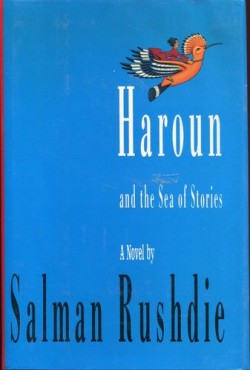
Book Review: Haroun and the Sea of Stories by Salman Rushdie

image

In December 2010 I read and reviewed Luka and the Fire of Life by Salman Rushdie. I haven’t read all of Rushdie’s works but I have loved the ones I have, including Luka and the Fire of Life, which is the sequel to Haroun and the Sea of Stories.

Quote: There was once, in the country of Alifbay, a sad city, the saddest of cities, a city so ruinously sad that it had forgotten its name…
And in the depths of the city, beyond an old zone of ruined buildings that looked like broken hearts, there lived a happy young fellow by the name of Haroun, the only child of the storyteller Rashid Khalifa, whose cheerfulness was famous throughout that unhappy metropolis, and whose never-ending stream of tall, short and winding tales had earned him not one but two nicknames. To his admirers he was Rashid the Ocean of Notions …
to his jealous rivals he was the Shah of Blah.

In Haroun and the Sea of Stories, Haroun is upset that his mother has run away with the weasly clerk from next door and his father, the famous storyteller, seems to have no more stories to tell. The latter being a result of the former. When Rashid, the most famous storyteller of the land, is called into service by a gangster politician, Haroun is beyond worried that his father’s dried up gift for gab is going to get them imprisoned.

A sleepless night in a peacock bed result in Haroun riding a mechanical bird right into a story war. He’s accompanied by a water genie, a floating gardener, some talking fish, the mechanical bird and a host of other magical creatures. Of course Haroun is the hero of this tale and is awarded a happy ending.

I bought this book in the ancient book market in Argeliers, France, while looking for a happy ending. The Shad of Blah certainly delivered a delightful holiday read. He knows how to spin a frown upside down.

If you liked Mark Haddon’s The Curious Incident of the Dog in the Night-Time, Lewis Carroll’s Alice in Wonderland, or any other quirky tale then give this one a go.

Book Review: The Little Old Lady Who Broke All the Rules by Catharina Ingelman-Sundberg

79-year-old Martha Andersson dreams of escaping her care home and robbing a bank.

Well I was worried about taking this book cover through customs but Martha Andersson’s luck was on my side. This old bird is a spring chicken when it comes to planning the perfect crime. Martha and her cronies are fed up with budget cuts in their retirement home that have led to reductions in the amount of coffee they can have per day and the elimination of biscuits with their tea. It’s simply outrageous and, what is even more insulting, the prisons in Sweden look like luxury accommodation in comparison. Something must be done.

When the old foggies can’t get improvements at home, they form the League of Pensioners and rob an art gallery. It’s the perfect crime. Even the police and newspapers make that claim. But what these seniors want is time in prison so they turn themselves in and figure out a way to keep the ransom money, return the paintings and be the Robin Hoods of their day.

If you liked The Girl Who Saved the King of Sweden by Jonas Jonasson or The Love Song of Miss Queenie Hennessy by Rachel Joyce then you’ll enjoy this funny heist.

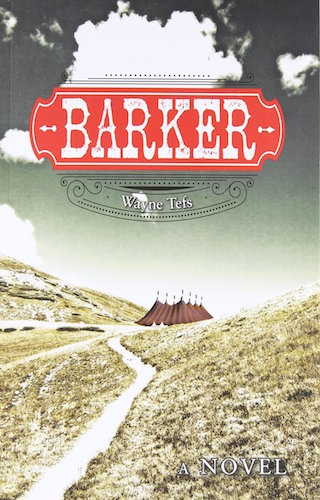
Book Review: Barker by Wayne Tefs

image

Harlan runs away with the circus, becomes a barker (the guy who calls in the crowds) and eventually ends up in bed with the knife-throwers’ wife. You can imagine where it goes from there. Harlan is one of those guys who is always on the run. He runs away to the circus. He runs away from the circus. He runs away to the army. He runs and runs but he can’t run away from the voices in his head.

This depression-era saga follows our man Harlan from prairie homestead with an SOB dad to the traveling circus and into the army. He’s almost fodder in the Pacific theatre but the war dries up and he finds himself in real estate. “I coulda been a contender,” comes to mind. Funny enough Harlan finds his way in the most unusual way.

This is the last book by Wayne Tefs, award-winning author of nine novels, a collection of short stories and two memoirs. I have always enjoyed his writing and he is one of the prairies noteworthy authors. I felt very sad reading this book and also very pleased to have a personal connection to him.

Barker by Wayne Tefs (published by Turnstone)

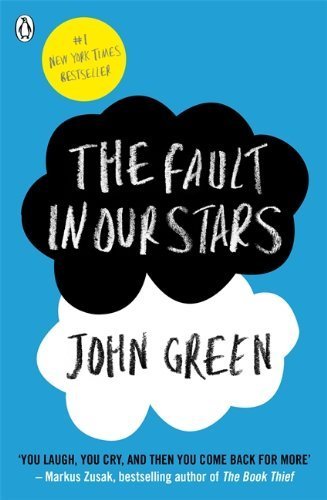
Book Review: The Fault in Our Stars by John Green

image

A heart-breaking, yet uplifting, book about two teens who fall in love after meeting at a Cancer Kid Support Group. Maybe you’ve seen the movie or read the hype about this book, either way, it’s all the wonderful things said and none of the bad. Hazel’s cancer is stable but she has never been anything but terminal. The wait is on. A fellow support-group kid named Isaac is her companion when it comes to sighing and eye rolling during the support group sessions and one day Isaac brings his friend Augustus to the group. Augustus is missing a leg due to his cancer but is in all respects a heartthrob. Former basketball star, instant charmer and class clown, Augustus has it all and only eyes for Hazel from day 1. Admittedly he is staring because Hazel reminds him of an ex-girlfriend, or rather of a former girlfriend who passed away from her cancer.

It’s love in the cancer ward and, although author John Green has made up many of the medical aspects, he seems so spot on with teen malaise and irony that you might think he is still a teenager himself. I found this book more funny than sad and it’s definitely raw as well as raucous. There are lots of big questions in this book and the story acts as a pleasant philosophical examination of living, loving and taking risks.

Amazon.ca: The Fault in Our Stars ,by Green, John ( 2013 ) Paperback

Book Review: The Love Song of Miss Queenie Hennessy

imageA quaint love story, or rather unrequited love story. Rachel Joyce’s first novel, The Unlikely Pilgrimage of Harold Fry, is the story of a saintly pensioner who walks, in yachting shoes, across England to say goodbye to a friend from long ago who is in a hospice. This is the other side of the story. Miss Queenie Hennessy is the friend who is waiting for Harold Fry, and while she waits, she writes out her confession and goodbye to Harold.

And I mean, really, the woman is dying. You’d think the man could get on a train or bus. But no, he is walking and she is waiting. The time gives them space to build themselves up for the visit, I suppose.

Anyway this companion book, since it’s not really a sequel, is about the burden of guilt Queenie has been carrying since leaving Kingsbridge 20 years ago. The novel is her letter to Harold about her recollections of first seeing him, dancing to himself under falling snow, and then meeting in the canteen at the brewery. She mentions, often, that Harold always remarks to everyone that they first met in the stationery cupboard. Miss Queenie Hennessy, however, was balling her eyes out so perhaps she’d rather remember it as the canteen. No matter. The “where” is the least of her deathbed worries.

Instead it’s that she met, danced with, and became friends with Harold’s son and never said a word about it to Harold. More than that, Harold’s son David stole money from her, along with her love poems and egg whisk. The egg whisk being the most irritating item to go astray. She lent David books, let him sleep on her couch, gave him money and offered up friendly advice about staying in touch with his parents. But David was as troubled as he was troubling.

Despite Queenie’s efforts to befriend him, David lied to her, mocked her, and eventually disappeared. His sudden death put Queenie on the spot. She couldn’t confess. She couldn’t tell Harold about her involvement with David because she feared the betrayal would be too great. She ran away then, but now she’s determined to say the things she wished she’d said then.

The Love Song of Miss Queenie Hennessy is her declaration of love and her confession. If Harold Fry’s pace is slow, Rachel Joyce’s writing just clips along at a good measure, which makes this 300-pager feel like a zippy read.

imageThe Unlikely Pilgrimage of Harold Fry was shortlisted for the Commonwealth Book Prize and longlisted for the Man Book Prize. Read them both, why not.

See Books by Rachel Joyce on Amazon.ca

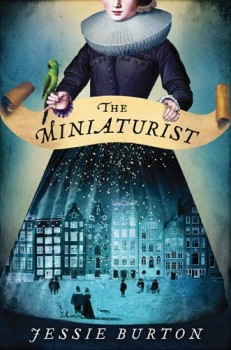
Book Review: The Miniaturist by Jessie Burton

image

The Miniaturist: “There is nothing hidden that will not be revealed.” When the newly married Nella Oortman arrives in Amsterdam on a brisk autumn day in 1686 she is expecting to be warmly embraced into her husband’s household. Johannes Brandt is a wealthy merchant trader who is well respected, and Amsterdam is a glittery new start for Nella who comes from the country with a suitcase and her ancient, respected Oortman name. She soon discovers that her family name is likely the only reason she is there. Johannes’ sister Marin is a younger version of Downton Abbey‘s Dowager Countess, and she certainly runs the household, not a role Nella the new wife is going to assume.

Johannes is kind, but mostly away travellling, and his affections, when home are showered on his dogs, not Nella. The one gift he presents to her is a cabinet-sized replica of their home. Nella finds a miniaturist to furnish the rooms but, as cryptic package after package arrives, Nella’s wonderment shifts to eerie suspension. The miniatures of the household are exact replicas of the furniture and family members, and they are lovely at first. But then unrequested items like a small cradle arrive. It’s like the miniaturist knows the family’s deepest desires and secrets.

When Johannes’ favourite dog is killed and a long-time servant disappears, the artistry seems to turn to witchcraft. Nella is left wondering if the packages are benign predictions of the future or warnings of things to come. The whole experience is all the more alarming given that Nella is living in Amsterdam at a repressively pious time: puppets are banned, and even man-shaped gingerbread is forbidden. But false idols end up being the least of her concerns when Johannes is betrayed by a friend and arrested.

The Miniaturist is a beautifully written fairy tale with all the witchcraft and sugar plums you could possibly want. It’s beguiling. Fans of the Night Circus by Erin Morgenstern will enjoy this story. I think readers of historical fiction, Sarah Waters or Markus Zusak (The Book Thief) will like it too.

Or check out what readers say on Goodreads

Book Review: A House in the Sky by Amanda Lindhout and Sara Corbett

This shocking and disturbing account of a journalist’s capture and torture in Somalia in 2008 was one of the most celebrated books of 2013, making the Globe 100 and hitting all the notable lists. A House in the Sky reads like a novel, which allows the reader to step away from the narrative a little bit and pretend that this is a fictionalization (you need this survival technique to make it through the book). The strength of the harrowing adventure is in the authors’ ability to slam the reader back into reality at just the right moment.

Here’s the general rundown: Amanda Lindhout grows up in Red Deer, moves to Calgary, works as a cocktail waitress and raises enough money to travel the world. She’s got the travel bug and moves quickly beyond the minor inconveniences of the backpacker lifestyle and into the major challenges of being a fledgling journalist in Iraq then Somalia. Her solo travels across Sudan, Syria and Pakistan do not prepare her for the full-blown war in Somalia or for the captivating power Osama Bin Laden will have on Somali militant groups. She’s not safe the second she lands and by day four she has been abducted along with a photojournalist from Australia. The two are held captive for 15 months, and Amanda is starved, raped, beaten and tortured. Initially the violence is moderate, a way to show who’s boss, but as the months drag on and the families refuse to pay the ransom demands, life gets much, much harder.

The journey is unimaginable. Amanda’s fortitude is amazing. And I never, ever want to read this kind of story again and think “well, they chose to go there.” The bigger question is “why the hell do people do this to each other?” The answer is money. And that is a very sad answer.

Amanda’s story is certainly about personal mistakes and wrong turns but it’s also a reminder that the stories we hear on the news about journalists who are captured, tortured and sometimes beheaded on camera are just one small fraction of the madness going on. There is a deeper story about survival and sacrifice, both for the captors and the captives.

Book Review: The Girl Who Saved the King of Sweden by Jonas Jonasson

A hilarious novel about a South African woman who knows too much, twin brothers (one of whom knows too little) and the foibles of the sanitation department, nuclear weapons programs, the Mossad, the Chinese, and the Swedish royal family. Think Airplane meets National Lampoon meets The Butler.

The Girl Who Saved The King Of Sweden: A Novel by Jonas Jonasson was a delightful read over the holidays. It’s ridiculous in a believable way.

Book description: On June 14th, 2007, the King and Prime Minister of Sweden went missing from a gala banquet at the Royal Castle. Later it was said that both had fallen ill: the truth is different. The real story starts much earlier, in 1961, with the birth of Nombeko Mayeki in a shack in Soweto. Nombeko was fated to grow up fast and die early in her poverty-stricken township. But Nombeko takes a different path. She finds work as a housecleaner and eventually makes her way up to the position of chief advisor, at the helm of one of the world’s most secret projects.

The highlights are that Nombeko is super smart and is in a shitty position (literally) as an assistant in the sanitation department in South Africa. The idiot managers can’t count and she has powerful math skills. Through a series of events involving self defence and a pair of scissors she learns to read. I can’t reveal too much! She inherits a jacket lining full of diamonds and accidentally gets run over. She is found at fault and is basically sold into servitude to a drunk who’s in charge of South Africa’s nuclear program. He can count but barely. His father has paid off the university to get his son the engineering degree that’s landed him in this position. Nombeko saves the day and her own skin by helping him develope six nuclear missiles in the 1980s, then voluntarily dismantle them in 1994. Unfortunately the counting part means there is a seventh missile that only a few people know about, including Nombeko and the Israeli secret service. She masterminds a plan to escape to Sweden but a misdirected package of antelope meat turns out to be the seventh missile, which she manages to safeguard in Sweden for over 20 years, with the help of twin brothers, one of whom has a vendetta against the King of Sweden and the other who doesn’t exist since his father never declared his birth to the state. Honestly it’s all terrifically unbelievable but the writing is fantastically funny.

2 Cookbooks, 2 Novels

Four books that I loved and haven’t had a chance to review:

Pucker by Gwendolyn Richards
Canada’s Julia Child brings citrus fans a melody of recipes from breakfasts to mains, drinks to sweets. It’s is tart and tangy with recipes like Lemon Bourbon Sours, grilled grapefruit, Citrus-Braised Pork Shoulder Tacos, and Lime Sugar Cookies. Yum yum yum.

Dirty Apron Cookbook by David Robertson
Fans of this Vancouver-based restaurant and cooking school will recognize many of the recipes in this amazing cookbook that features 80 of the school’s time-tested signature dishes. The pulled pork is delish and I barely managed to take photos of the dish before we gobbled it up.

Adult Onset by Ann-Marie MacDonald
Spend a week with this stressed out mom and all will look well in your world. Mary Rose, aka Mister, is home alone for the week with her two young kids while her wife travels for work. It’s a mix of family drama, swimming class, personal reflection, parenting of aging parents and general stress management. My comments on this title for the Vancouver Sun Book Club are here and there are 4 weeks of book club discussions plus our chat with author Ann-Marie MacDonald.

All the Light We Cannot See by Anthony Doerr
A delightful, and sad tale, about two young people whose paths cross during WWII. Marie-Laure lives with her father in Paris near the Museum of Natural History, where he works as the master of its thousands of locks. He create miniatures of their neighbourhood so that Marie-Laure, who is blind, is able to navigate her way around. He also makes small puzzles for her and in one is a gift that she cannot reveal to anyone. In a mining town in Germany, the orphan Werner grows up with his younger sister, enchanted by a crude radio they find. The love of this radio and its mechanics draw Werner into Hitler’s service. As the two are drawn from their homes, their lives intersect in a really lovely yet tragic way.

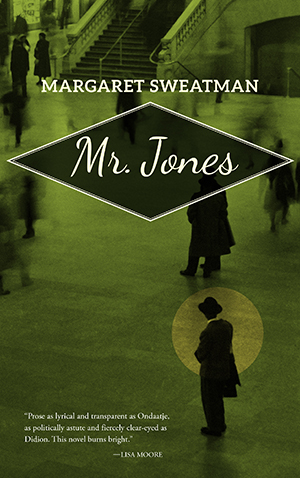
Book Review: Mr. Jones by Margaret Sweatman

image
Mr. Jones by Margaret Sweatman is a Canadian spy drama set in the 1950s and 60s when McCarthyism and paranoia was rampant, the Cold War was well underway, John Diefenbaker and Lester Pearson shared the political stage in Canada, and the CIA was reaching its long arms into every country. This is the story of Emmett Jones, war vet, Japanese expert and member of External Affairs, who suffers the indignation of being investigated by the RCMP and the FBI, repeatedly. The question for the reader is whether he’s a spy or just idealistic.

Emmett Jones is a Canadian born in Japan, who fought in WWII with Bomber Command, and was disillusioned by his involvement in the bombing of German citizens. Post-war he meets a young idealistic man named John Norfield whose Communist ideals are of interest to Emmett. Smart but directionless, Emmett appears to be “trying on Communism” but still questioning the merits propounded by the zealous supporters he encounters. Plus there’s a woman he’s hot for who is in the mix so his intentions are opaque.

Norfield disappears and Emmett gets the girl. Emmett has joined External Affairs to focus on Japan, and I’d love to say they live happily ever after but Emmett is recalled from his post in Japan, is accused of espionage and later investigated.

As the book description says: “Evoking the classic works of le Carre and Greene, Sweatman’s novel is a shattering exploration of a past where world governments threaten annihilation while training housewives in the proper techniques for sweeping up radioactive dust.”
.
Sweatman’s setting for the novel is a fascinating part of Canadian history that is often under taught in schools in lieu of America’s more colourful involvement in the Korean War, Vietnam, and the Cuban Missile Crisis. But it’s also the early days of NORAD, the construction of the Berlin Wall and the arms race. Pearson’s involvement in the peace process is noteworthy and an interesting backdrop to the personal drama of Emmett Jones.

“Set in the 1950s and early 1960s, a period of rampant paranoia, Mr. Jones peels back the polite veneer of Canadian society to reveal a nation willing to sacrifice its own. A time of fear, a time of ‘peace’ at the onset of the nuclear age, it is the era of McCarthyism, when governments alleged there was a communist under every bed and a traitor in every friend.”

Is Emmett a spy or not? Is his wife? Is his bestfriend? Is the Japanese man who he befriended a spy? Will that man reveal the great secret they share? The wonderful thing is the tension Sweatman creates with the what ifs but also the layers of possibilities infused in the writing. Emmett Jones is a man with two lives. He has two families: a son in Japan born to his lover, and a daughter born in Canada to his wife. The birth of his son predates his marriage but remember this is the 1950s and things certainly would not have been easy for his son. Do his scruples in love reveal duplicities elsewhere in his life?

Mr. Jones is a fantastic piece of historical fiction, and a top-notch spy drama, set in Canada.

Buy it from Goose Lane Editions: http://www.gooselane.com/books.php?ean=9780864929143

« Older posts Newer posts »

© 2026 So Misguided

Theme by Anders Noren — Up ↑