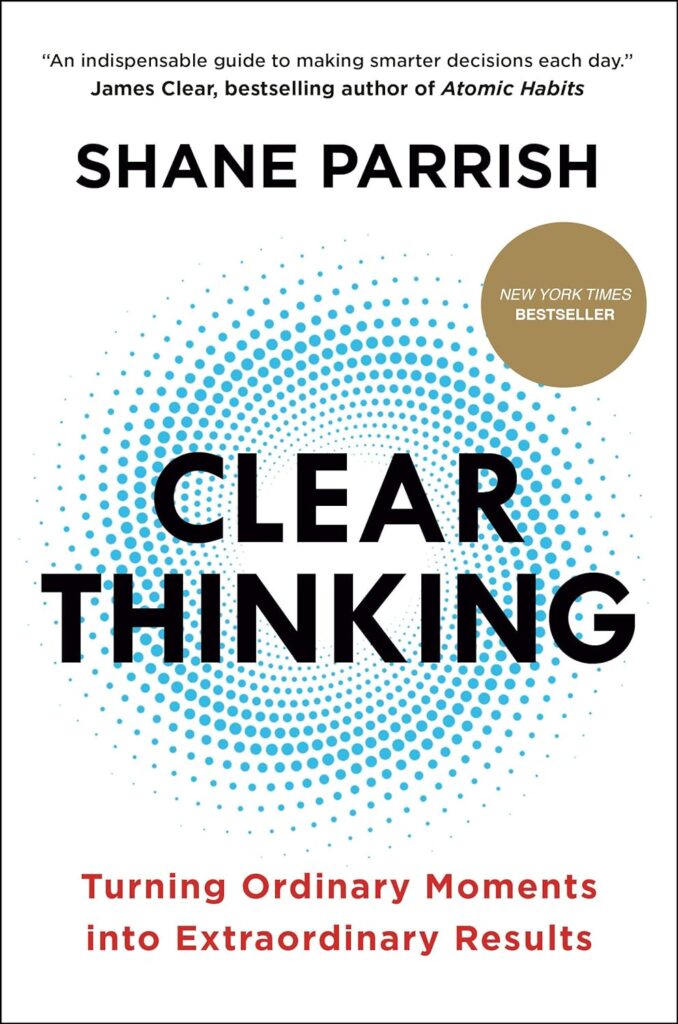
Shane Parrish’s book Clear Thinking is my best nonfiction read so far, well for personal development. He outlines the four default responses that lead to poor decision making and how to create safeguards and routines to ensure intentional, deliberate choices are made instead. The four, instinctual, defaults are emotion, ego, social and inertia.
- When we have an emotional response, it is to feelings vs. facts. Stress, fatigue, hungry, anger can all trigger an impulsive reaction.
- When we have an ego response, it is a reaction to threats to our self-worth or status.
- When we have a social response, it is to conform to group norms. That need to belong can block independent thought.
- When we have an inertia response, it is about resisting change by doing nothing. Maintaining the status quo.
The next part of the book deals with the ways you can overcome those defaults with self-accountability (taking responsibility for your actions, no more “it’s not my fault”), self-knowledge (knowing your strengths and weaknesses and adjusting for your biases), self-control (mastering emotions and taking a pause before reacting), and self-confidence (trusting your abilities and taking action).
The last part of the book is about the decision-making process. Much of this section is similar to an online workshop Shane Parrish ran through his Farnam Street blog. It’s a 5-step process for making better decisions. The first step is actually defining the problem in a clear and specific way to ensure you are solving for the right issue. He has lots of tips for exploring solutions and avoiding binary (do it, don’t do it) options. Then evaluating the options gets full treatment in the book with clear steps on how to gather info (not too much, and from diverse sources but ideally as close to the source of expertise). The execute stage is about when decisions are either reversible or irreversible, consequential or inconsequential and how knowing what type of decision it is can then impact the speed of your decision. And last is learning from your decisions–documenting your process vs. “resulting” or assuming if it worked out that it was more than chance.
Clear Thinking is a great book to read if you are in the early stages of a big decision: do I seek out a higher position, do I invest a chunk of money into something, do I move cities. If you’re in the middle of a big change, then this might be too much, too late in the process. But if you’re interested overall in how you react to the world around you—everything from retorts at work to major decisions—then this is a self-help book mascarading as a business book in the best possible way.
If you like James Clear’s Atomic Habits or Brianna Wiest’s 101 Essays That Will Change the Way You Think then this is a great follow-up read.