Plain words, uncommon sense

Tag: canadian (Page 1 of 4)

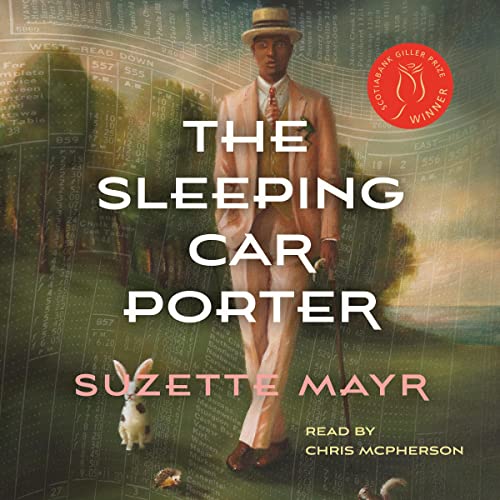
The Sleeping Car Porter by Suzette Mayr | Book Review

Set in the 1920s, The Sleeping Car Porter follows Black railway porter Baxter, along several routes, notably Toronto to Vancouver. Baxter is a closeted gay immigrant, trying to save money for dentistry school, and he must follow a series of rules about engaging with the white passengers, cleaning the car, keeping his uniform tidy, and polishing shoes. It’s exhausting, especially when Baxter must also mind a little girl who refuses to sleep and he loses out on his own quick naps.

Overall I enjoyed this book, especially learning more about the labour conditions of these men and the racism they experienced. The pace is slow, like a train, and that’s part of the charm of the writing. You get physically tired. When Baxter’s eyes start to droop, so did mine. Hah. But I mean that as a compliment.

There’s a dream-like quality to the writing as well. A bit of magic realism? Baxter seems to see a man huddled on the floor frequently, but the hallucinations are likely part of his sleep deprivation.

The setting of the train also makes for a wonderful cast of characters. There’s a film star, a medium, a granny and child, a mother and daughter, a couple, two business men, a doctor … plus the various porters and their boss. Each one becoming more memorable and complex as the journey wears on.

An artfully constructed story, with a bit of a history lesson, and a lot to say about the social constructs that prevent us from understanding and appreciating those around us.

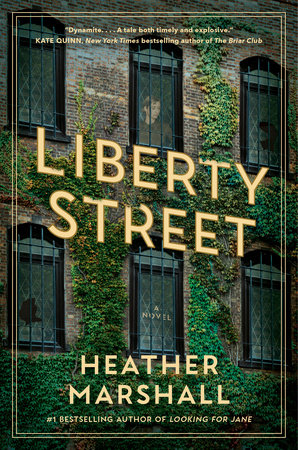
Liberty Street by Heather Marshall | Book Review

Liberty Street by Heather Marshall follows female stunt-reporter Emily Radcliffe into the notorious Mercer Prison for women. It’s 1961 and Emily is an editorial assistant at Chatelaine magazine, who is looking for a big break that will lead to an author byline. Emily’s father is a well-known journalist and she’s always wanted to follow in his footsteps. Her mother, on the other hand, wants Emily married off and safe at home.

Chatelaine is breaking social barriers with articles about domestic abuse and the contraceptive pill. They have to do so with a bit of subtrafuge because the public (in particular men) are not ready for women’s independent. The social problem is writ large in this novel. There are social expectations placed on women, lack of awareness about postpartum and other mental health issues, institutional powers that allow any woman under 25 to be brought before a judge and jailed for being incorrigible and then a release that hinges on a doctor’s judgement. This is historical fiction but the basics of the magazine’s direction, Canadian law and the Mercer prison are true.

Emily purposely gets herself jailed, with the help of her father, only to learn how harsh penal institutions can be. The prisoners are injected with trial drugs, face venereal diseases, rat and lice infestations, and malnutrition.

A parallel story set in 1996 follows Detective Rachel Mackenzie who is investigating female remains in an unmarked grave. Despite being an excellent detective, Rachel faces sexism and discrimination. She’s on the other side of the bars, and health-care standards have improved, but she’s shortchanged all the same. The female remains are eventually connected to the prison and Emily’s story.

Overall this is a haunting exposé of Canadian law, its institutional disregard for women, and the systemic bias faced by women. It’s certainly historical fiction but it’s a dark story that, like so many others, doesn’t make it into common knowledge of Canadian history.

This wasn’t my favourite read. I found it ghastly and I’m too aware that “difficult women” are still fighting the “rules.” I wasn’t in the mood for such a grim story but there are good female characters and it has a mystery, twist element. If you like shows like Midsomer Murders then it has that vibe.

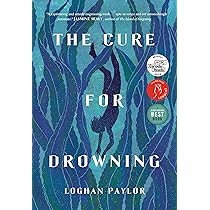
The Cure for Drowning by Loghan Paylor | Book Review

The Cure for Drowning by Loghan Paylor is my favourite summer read so far. The debut novel, and winner of Canada Reads, is a beautifully written, compelling story about two teen girls who become friends and lovers during a time when gender rules were rigid and difference was not rewarded. It’s 1939 and the world is on the brink of a war.

Kathleen McNair, known as Kit, has lived on her family’s Ontario farm all her life. She is a tomboy, a daredevil, and the middle child of a struggling Irish immigrant family whose land has never quite given them enough. Kit is also afflicted, or maybe gifted: water spirits, fairies, or family legend speak to her. She hears and sees things that others do not, and her mother carries the old stories like warnings.

Kit loves racing her horse against the trains coming into the village. This is how she is first seen by Rebekah Kromer, who arrives with her German father and Québécois mother. Dr. Kromer is the town’s new doctor, and Rebekah is immediately drawn into Kit’s orbit.

The two become fast friends, then more than friends. Their dalliances by the river are tender, secretive, and charged with positive energy. But as anti-German suspicion grows, the Kromers no longer feel safe in town and return swiftly to Montreal. Too swiftly for Rebekah to speak to Kit. The injury is full on heartbreak for Kit, who runs away from home and eventually joins the air force disguised as Chris, a boy she convinces to go home to his own family while she takes his kit and his place.

What I liked most about this novel is the writing. The story itself is propulsive—family secrets, queer first love, wartime fear, misdirection, longing—but the standout is Paylor’s prose. The rural Ontario setting feels like a familiar place. The magical elements feel rooted in family history rather than added on for magical effect. And Kit and Rebekah are such a compelling characters: stubborn, reckless, brave, lonely, and always pushing against the life other people are trying to assign to them.

This is also a Canadian historical novel that does something more interesting than simply place a romance against the backdrop of war. It looks at belonging: to a family, to a body, to a country, to a story that may or may not have room for you. Kit and Rebekah’s relationship is moving because it is both intimate and impossible. They are young, in love, and pulled apart by societal forces. The question is what they will do to survive, which seems like such as Canadian story.

The Cure for Drowning deserves its praise and awards. It is evocative without being fussy, romantic without being sentimental, and historical without feeling dutiful.

If you liked The Pull of the Stars by Emma Donoghue or The Nightingale by Kristin Hannah, then you’ll enjoy The Cure for Drowning. It has a similar vibe with strong female characters and a backdrop of war but, most important, stellar writing.

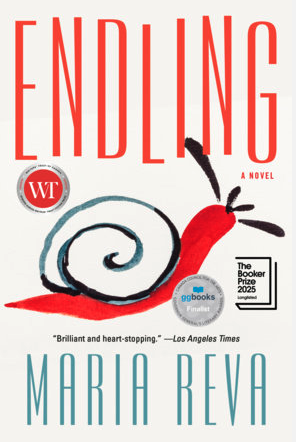
Endling by Maria Reva | Book Review

Endling by Maria Reva is racking up the awards! Well deserved. The novel is a bit like a rubik’s cube in that there are different tales that twist and turn together, revealing the story. Set in Ukraine, 2022: Yeva is running a mobile lab for snails. She’s scouring the country’s forests and valleys for the “endlings,” the last of their species. There is lots of little snail science sprinkled throughout the book. As you can imagine, this is not the life Yeva’s family wants for her. They want her to marry. It’s unlikely, but to finance the lab, Yeva joins a dating agency for North American men looking for Ukrainian brides.

Nastia and Sol (Solomiya) are also part of the agency. Nastia as a beautiful blonde bride and Sol as a translator. Their mother would be displeased by their life choices too since she spent most of their childhood protesting against the marriage industry. But their mother has disappeared, and in a childish way the sisters think they may get her notice by being part of the problem. Unlikely.

During one of the romance tours, Nastia approaches Yeva about borrowing the van. Yeva forces her to submit a proposal and insists on pretending it’s like a government grant or funding proposal. It’s very funny, and sad. Yeva is at the end of her rope. The snails have died, except for one called Lefty. But Nastia persists and Yeva relents. Yeva soon finds the van full of 13 bachelors who Nastia is effectively kidnapping in protest, a last ditch effort to attract her mother’s attention. Well, things go wrong. Specifically Russia invades.

The story of the bachelors, the sisters and Yeva all twist together into the story of Reva’s own experiences as a Ukrainian expat watching her homeland be destroyed and worrying about family. There are sections of the novel that feel experimental, where there are rewrites of certain passages. There’s commentary on the agent-editor-publisher process and what North Americans’ understand (or want to hear) about the war. All of that works to create a sense of urgency and social commentary that makes the novel really interesting.

I enjoyed this story. It’s about love (not necessarily romantic love), passion for a job, hope, resilience, and the chaos of life.

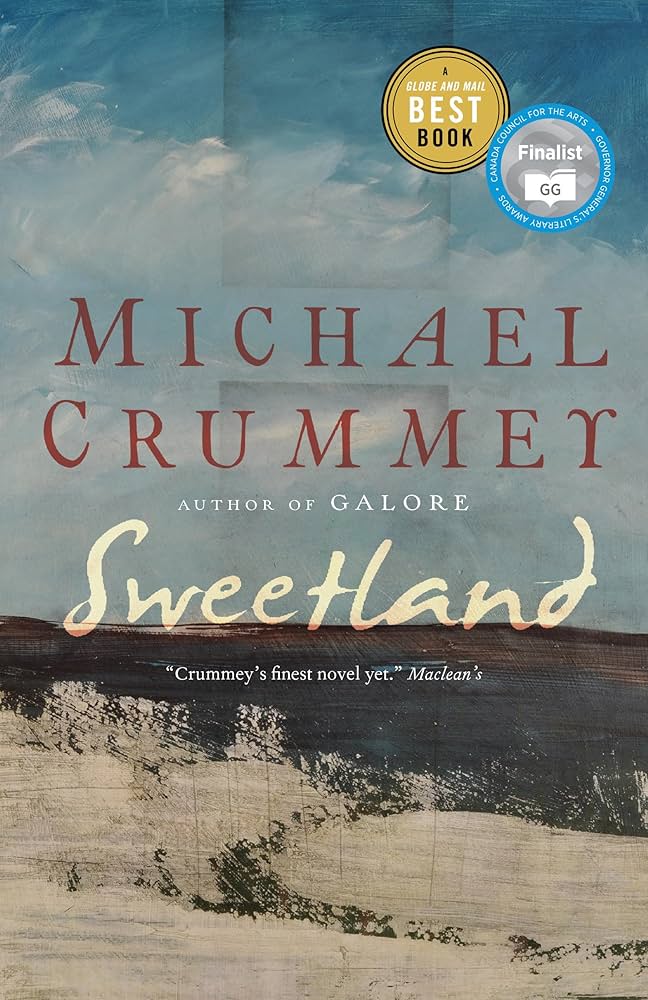
Sweetland by Michael Crummey | Book Review

Gosh, Michael Crummey is an extraordinary storyteller. I loved Sweetland.

Moses Sweetland has lived all his life on a remote island off Newfoundland’s south coast, which is called Sweetland. In fact, 12 generations of inhabitants have called this rugged and unforgiving bit of rock home. But now the government is keen to relocate the few residents. They are offering a nice relocation package and everyone is on board except Sweetland. He’s living off the land as a fisherman and trapper. He’s the former lighthouse keeper, lifelong bachelor, and odd-job man with neighbours who need help with a calf or a grave dug. Sweetland just cannot imagine leaving. I said earlier he’d live all his life here, but he did have a stint on the mainland where he tried to make some real money with his buddy Duke. But the drink and drugs and general lack of employment opportunities did him in.

This character rankles. He’s kind and stern, he’s forthright and sullen, he’s cunning and an imbecile. A true force of nature.

If you like Niall Williams, Tana French, John Banville, then you’ll love Michael Crummey.

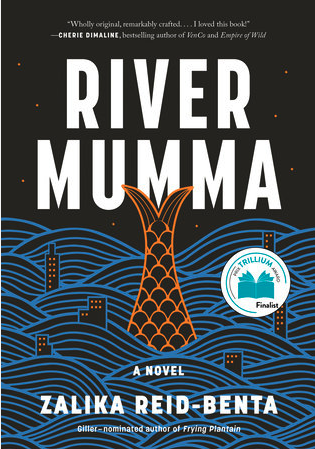
River Mumma by Zalika Reid-Benta | Book Review

Alicia, Mars and Heaven are twenty-something coworkers who find themselves on a quest to return River Mumma’s comb. They share knowledge of their Jamaican heritage in order to move through different stages of the quest.

Alicia is the first to see River Mumma, who appears to her late one night as she walks home alone through a dark Toronto park. River Mumma drags Alicia down into a river where Alicia sees her ancestors and starts to reconnect to the magic and folklore of Jamaica. In contrast, Heaven, who is most knowledgable of her heritage, is the last to see River Mumma. Her pride and convictions work against her, but her friendship with a healer really saves the day when Alicia and Mars are infected wtih duppie sickness (duppies are malevolent spirits who chase the trio through the city, preventing them from completing their task).

River Mumma has a quiet level of magical realism to it. Yes, there’s a diety, a quest, duppies, and weird, unexplainable stuff that happens but it’s mostly a novel about accepting your family history and embracing your life journey.

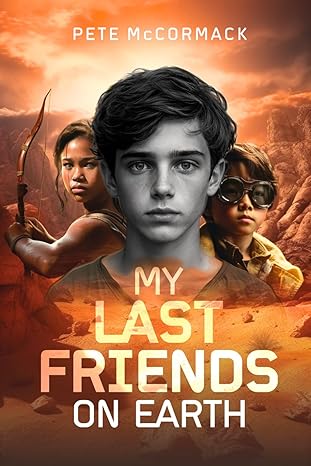
My Last Friends on Earth | Book Review

My Last Friends on Earth by Pete McCormack is a young-adult sci-fi novel about the last human on Earth, who escapes a lab and his captors, finds some unlikely friends, and defeats (or at least survives) an army of bots and aliens who are seeking to destroy him.

The novel opens with humanity on the brink—actually, past it. A devastating alien invasion has wiped out most of the population, but 15-year-old Harlo Kanu is the last human left inside a data lab. He’s kept his head down to avoid attention but suddenly the lab data on his brain shows that there’s intel there that Tri-General Nezkaban wants destroyed. Harlo doesn’t know what’s in his data, but he knows that his time is up. With the help of two of his captors and a mutant creature, Harlo is able to escape the unescapable lab.

That escape kicks off Harlo’s awareness of a small resistance group. He meets a former Queen, a fierce warrior, a brilliant 9-year-old weapons designer, a techni-colour dreamcoat scientist, and a mysterious collective known as the Council of Many Sizes. It’s quite the cast of characters!

What follows is a fast-moving fight not just for survival, but for truth, connection, and the possibility of a future.

YA sci-fi is not my usual genre—but author Pete McCormack is my friend and I can absolutely see why this book is finding readers.

It’s imaginative and energetic, with a clear sense of stakes right from the start. There are plenty of exciting moments, near-misses, and cliffhanger-style turns that make it easy reading. The world-building here is big, sweeping, and ambitious—at times it reminds me of a younger, more accessible Dune, with layered systems, factions, and a sense of a much larger universe beyond the page.

The heart of the book is about friendship, resilience, and refusing to be broken.
If you like scrappy heroes and strong found-family vibes, this will hit the mark.

Book of Lives: A Memoir of Sorts by Margaret Atwood

Gosh, I am totally smitten with this book. I listened to the audiobook, narrated by Atwood herself. It’s a total gem, covering Peggy’s childhood—growing up in the bush half of the year—through her teen and university years, the birth of Canadian publishing, and the successive peaks of her family life and career. I loved the intimate details, the inside stories, the quiet “guffaws” included in the recording as she laughs at parts of the story. I love the cover image and the various photoshoot images.

Book of Lives (rhymes with lies) is the finest example of a memoir that I’ve ever read. Snarky, blunt, and full of amusing anecdotes. It’s a love letter to her partner Graeme, a legacy for her daughter and step-kids, and a thank you to the array of people who influenced the formidable woman she is today.

My favourite Atwood works include The Penelopiad (Atwood’s retelling of The Odysseus from Penelope’s perspective) and Hag-Seed (her re-visiting of Shakespeare’s The Tempest). But I’m keen now to read Old Babes in the Wood, The Testaments, The Heart Goes Last, and Stone Mattress. Here are the brief descriptions on the author’s site. Book of Lives reminded me of the many, many Atwood works that I have not yet read.

Whoever convinced Atwood to write and publish her memoir, thank you. It’s full of travel, birding, entomology, canoeing, baking, knitting, gossip, land conservation, creative influences, and family tales. I loved it.

Let’s Talk About Aging Parents by Laura Tamblyn Watts | Book Review

If you have parents, they are aging. Let’s Talk About Aging Parents is a cheeky yet practical guide to having tricky conversations about retirement homes, dementia, taking car keys away, and the physical and mental challenges most older adults have with aging in place.

The book offers 27 prompts and roadmaps for having clear conversations with your parents and the other caregivers in their lives. There are jokes and asides to help ease the painful realization that none of this is easy. Medical issues often come to mind, but what about toxic sibling relationships? Age-proofing a house seems clear but what if your parents refuse help?

Laura Tamblyn Watts has advice and “plan Bs” for every situation. She’s a voice of reason in the otherwise fraught land of advice books. I starred a lot of paragraphs and made notes in the margin. I also recommended the parents in my life have a copy of their own. If we are all on the same playbook, then they can point out the approaches they would prefer.

Now … to go have those conversations.

Black Cherokee by Antonio Michael Downing | Book Review

Black Cherokee by Antonio Michael Downing is a story about resilience. Set in the 1990s, Ophelia Blue Rivers is left to be raised by her Black grandmother, who is the widow of a Cherokee Chief and the descendant of the first freed Black woman in South Carolina. Grandma Blue is no nonsense and Ophelia has her head in the clouds. But the two manage just fine until Ophelia is old enough to go to school. Her Black-Cherokee mix makes her the target of bullies at the Cherokee school. She is moved to Stone River to live with an aunty through high school, but her Black-Cherokee mix makes her to target of bullies at the all Black high school. She manages a bit better in the gifted program at the primarily white high school, but finds herself falling in love with a white boy, much to the chagrin of her family.

At every turn, Ophelia is left to wonder what family means to her, and how she will create a sense of belonging.

Antonio Michael Downing is the host of CBC’s radio program The Next Chapter. This is his debut novel and I hope it’s not his last. The writing is fresh and spirited. Ophelia is complex, Grandma Blue–who’s short on words–is even more complex. The book has some Toni Morrison vibes. Morrison’s debut The Bluest Eye explored the psychological effects of internalized racism on a young Black girl in the 1940s. With Ophelia, we see the modern-day (1990s–yet very-present effects) of race and identity on one girl’s coming-of-age journey.

« Older posts

© 2026 So Misguided

Theme by Anders NorenUp ↑