Plain words, uncommon sense

Tag: fiction (Page 16 of 16)

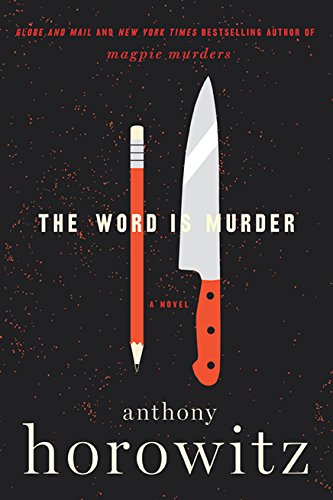
The Word is Murder by Anthony Horowitz

Description: The British cosy as postmodern fiction. Author Anthony Horowitz takes on a role in his own novel. Horowitz basically plays Watson to former police detective Daniel Hawthorne. Hawthorne has a Sherlock Holmes approach to solving murders and Horowitz is along for the ride. He’s been roped into writing true crime–much to his agent’s dismay–instead of the fiction he’s known for such as Foyle’s War, Midsomer Murders, The House of Silk, and the Alex Rider series for young adults. 

The novel opens with Diana Cowper walking into a funeral parlour and arranging her own service. Later that night she is dead. If this was a play, the director would yell “cut!” The scene is wrong, the detective steps in, this is Horowitz’s first draft and Hawthorne is unimpressed. There are edits and corrections, then Horowitz catches us up on how it has come to pass that he met Hawthorne and agreed to write Hawthorne Investigates

Just as Horowitz is a real-life person, so is another character Damian Cowper, the actor from Homeland. But this Damian is fictionalized whereas many details about Horowitz are true. Don’t worry, it’s not totally confusing, but I did find myself turning to google to search for who and what was real. 

Overall this is a fun whodunit and I was left guessing until the end. 

Favourite Moment: Well my favourite moment is when Horowitz finds himself in a bit of a pickle but if I tell you anything more then I’ll spoil the mystery. 

Perfect for fans of Magpie Murders, or any of Horowitz’s previous works. If you like Agatha Christie, British mystery dramas, or AJ Finn’s The Woman in the Window, then you’ll like this. It’s a clever mystery

Read a sample or buy the book at HarperCollins Canada.
Neverwhere by Neil Gaiman

Description: Neverwhere is one of NPR’s top 100 science fiction and fantasy books of all time. For good reason. It was published in 1997 and over the years various versions have been produced for tv and radio. But the edition I read is the author’s preferred text. It’s a bit meandering  but certainly makes some of the other versions feel a tad watered down.

The general story is that Richard Mayhew is a young businessman. He’s left Scotland to make his life in London. He’s happened, by chance, into a relationship with Jessica, who is a serious powerhouse and believes she can make him into the man of her dreams. Richard is a drip. En route to a very important dinner, the recently engaged couple have their plans thwarted when they come across a street girl who is badly injured. Richard insists on being a good Samaritan, which pisses off Jessica. She leaves in a huff and later calls off their wedding. This is all inconsequential to Richard who finds himself so deep in shit that a pissed off fiancee is the least of his worries. The girl Richard helps is from the London underworld. She’s undead or whatever would best describe someone who has been alive centuries. And it so happens that she’s being chased by assassins, creepy, creepy assassins. The Marquis de Carabas, Hunter, the girl Door (who is the noblewoman Lady Door), and Richard Mayhew embark on a quest to find who killed Door’s family and who is after her. There’s magic, misgivings, murderers, angels, and a whole world under London that is richer (and smellier) than Richard can even imagine. There’s even a night market held in Harrod’s, but London Below is such a different place than London Above. If Richard is noble enough, he might be able to return to his life. In the meantime, he’s going to die trying, maybe literally.

Favourite Moment: There are a ton of great moments with Richard, and the Marquis de Carabas is one of my favourite characters, but early on there is a little moment that perfectly depicts Jessica.

Jessica stood there on the sidewalk, watching him ruin her big evening, and her eyes stung with tears. After a while he was out of sight, and then, and only then, did she say, loudly and distinctly, as unladylike “Shit,” and fling her handbag as hard as she could onto the ground, hard enough to scatter her mobile phone and her lipstick and her planner and a handful of tampons across the concrete. And then, because there was nothing else to do, she picked them all up and put them back into her handbag and walked back down to the restaurant, to wait for Mr. Stockton.

Later, as she sipped her white wine, she tried to come up with plausible reasons why her fiancé was not with her, and found herself wondering desperately whether or not she could simply claim that Richard was dead.

“It was very sudden,” said Jessica, wistfully, under her breath.

Perfect for fans of … well of Neil Gaiman obviously. But otherwise, if you like radio plays, fantasy, science fiction, bizarre plot twists, Tim Burton, this is for you.


I Am a Truck by Michelle Winters | Book Review

Description: I missed reading this title last year when it was a finalist for the 2017 ScotiaBank Giller Prize, but I don’t mind letting the hype die down before I read award-nominated titles. This is a lovely debut novel about a man who disappears and the hope and grief of his wife. But it’s funny.

Agathe and Réjean Lapointe live in the woods near a small Acadian village. They prefer to stay away from the English town and embrace their French heritage. They have a routine. Réjean obsessively upgrades his Chevy Silverado. He would never dream of driving something else, or not treating it with loving care. This is why it’s so strange when the Silverado is found abandoned at the side of the highway. It’s not like him at all. With no leads and no trace of Réjean, Agathe needs to find work. She becomes a cleaner at Stereoblast in the English-speaking town, and falls in with her racy, spirited coworker Debbie. Debbie is going places, in the way that small-town women go places. But she’s a real friend to Agathe and they have a lot of fun driving, rocking out, smoking, and being goofy.

This is a crazy little novel with a lot of improbabilities but it’s very likeable.

Favourite Moment: There are lots of great scenes where the two women are in the car, listening to music, and, because rock and roll is so new to Agathe who’s always listened to Acadian music, Debbie is explaining the tunes. It’s Agathe’s intro to English and rock and roll.

They listened to Chrissie Hynde and her dirty song.

“Chrissie can do anything she wants,” Debbie yelled. “She plays guitar and sings and plays the harmonica, and has these amazing bangs. She just holds the whole thing together—listen to her. The rest of the Pretenders are guys too—helping her sing this song about screwing this guy. God…”

In the crowded parking lot at the Whisky Mak, Debbie fluffed up her hair and reached down the neckline of her sweater into each armpit to pull up a handful of speckled bosom. Agathe tugged her track suit top down over her mid-section and stood with her hands on her hips, watching as Debbie applied lip gloss, punctuating with a pouty smack. When Debbie flung open the red doors of the Whisky Mak, it was as though revealing herself at last to a crowd that had bought tickets to see her.

Perfect for fans of Thelma & Louise. There’s a heist element, there are two crazy friends, there are guns and cars and weirdos. And it’s more goofball charm than grand theft auto.


I Am a Truck


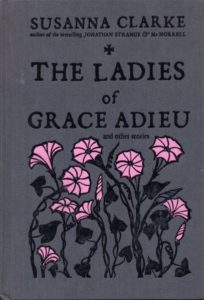
The Ladies of Grace Adieu by Susanna Clarke | Book Review

Description: I recently watched Jonathan Strange & Mr Norell on Netflix so my next read had to be The Ladies of Grace Adieu. I remember finding Jonathan Strange a tome but The Ladies of Grace Adieu is a slim collection of fairy tales brimming with all the same magic and twists of fate. There are petulant princesses, vengeful owls, and educated, country ladies who pass their time studying magic (unbeknownst to their bumbling husbands). The Raven King makes an appearance in several of the stories, as does Jonathan Strange and the Duke of Wellington.

Favourite Moment: In the story “The Ladies of Grace Adieu”, the three women — Mrs. Field, Miss Tobias, and Cassandra — are making their way home in the dark. They happen upon Jonathan Strange, who has fallen asleep under a tree while reading his book.

“What is it?” asked Miss Tobias.

Cassandra peered into the darkness. “It is a man,” she said with great authority.

“Gracious Heaven,” said Mrs. Field. “What kind of man?”

“The usual kind, I should say,” said Cassandra.

“I meant, Cassandra,” said the other, “what degree, what station of man?”

Jonathan Strange got to his feet, perplexed, brushing straw from his clothes. “Ladies,” he said, “forgive me. I thought that I had woken in the Raven King’s Other Lands. I thought that you were Titania’s ladies come to meet me.”

The ladies were silent. And then: “Well!” said Mrs. Field. “What a speech!”

“I beg your pardon, madam. I meant only that it is a beautiful night (as I am sure you will agree) and I have been thinking for some time that it is (in the most critical and technical sense) a magical night and I though perhaps that you were the magic what was meant to happen.”

“Oh,” cried Cassandra, “they are all full of nonsense. Do not listen to him, my dear Mrs. Field. Miss Tobias, let us walk on.” But she looked at him curiously and said, “You? What do you know of magic?”

“A little, madam.”

The conversation that transpires is very funny because the three ladies practice magic. In fact, one of them is a governess and has just done away with the pesky guardian of her charges. He was up to no good, anyway. Now they are, perhaps, aware that they’ve stumbled upon Jonathan Strange, the London magician. They have quite a few arguments with Strange’s recent writings, and once they establish that he is the man before them, they take him to task. Strange confides that he agrees with them but must do the bidding of Norrell, which draws their chiding and ire. It’s a delightful taking down of the top magician by some country ladies.

Perfect for fans of Jonathan Strange, Neil Gaiman, or The Night Circus by Erin Morgenstern. 

The hardcover (pictured above) is a lovely book, no jacket, with debossed pink flowers.


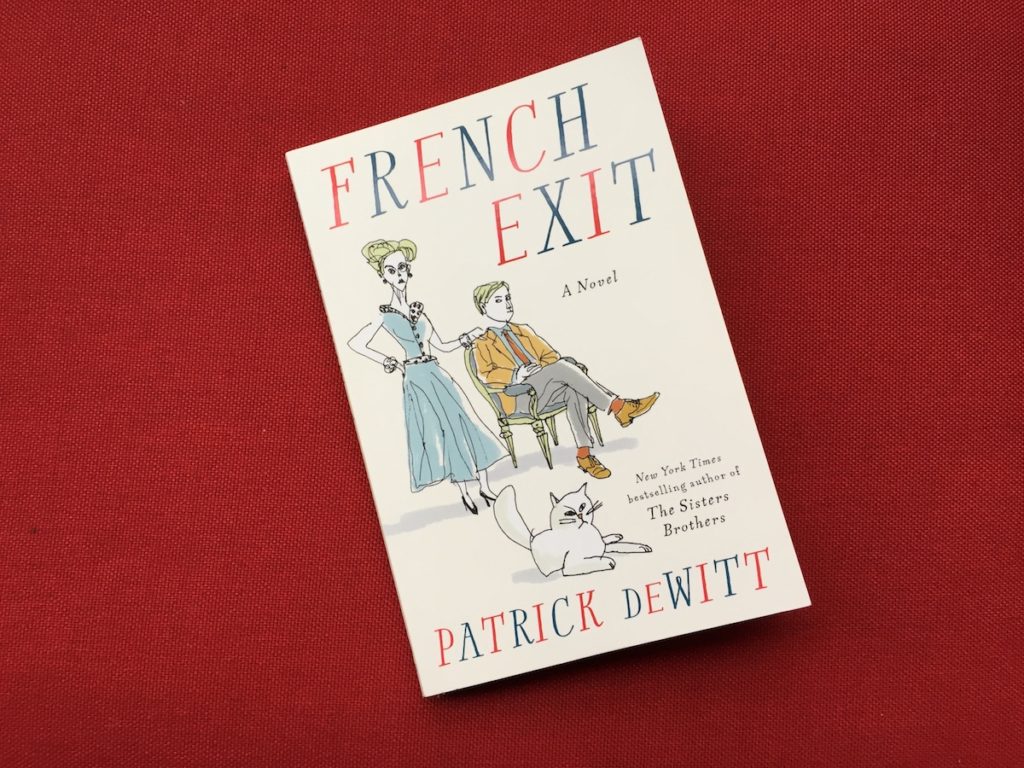
French Exit by Patrick deWitt | Book Review

french exit by dewitt

Disclaimer: Thanks to House of Anansi for this review copy. Patrick deWitt is one of my favourite authors (see previous reviews) and I was very pleased to be offered a copy.

Description: Downton Abbey meets the American version of The Office in this quirky novel about two socialites—a mother and grown son—who spend all their inheritance money and then exile themselves to Paris.

Frances Price is revered in New York social circles. She’s beautiful, wealthy, and dismissive of almost everyone, which makes her all the more desirable as a party guest. Her son Malcolm, 32, dotes on her and doesn’t do much of anything. The book opens with the pair excusing themselves from a boring hostess and then making pithy quips and snide remarks about the evening. Malcolm has pinched a picture frame, and apparently he has a habit of choosing parting gifts for himself.

Their following exploits include a flash sale of their possessions to pay for passage to Paris, a dalliance with the ship’s captain (Frances) and the fortune teller (Malcolm), smuggling a cat into France, riding a bicycle around the Paris flat, and hosting lavish dinner parties until the money is truly all gone.

Billed as “tragedy of manners,” this is a weird little satire that deWitt pulls off nicely.

Favourite Moment: Partway through their Paris adventure the pair meet Mme Reynard. During a drinking session she jumps up and accidentally cracks her head on an iron light hanging low over the table. Dr. Touche makes a house call.

Soon came Dr. Touche, a sleepy-eyed and swarthy man with the hands of a female adolescent. Mme Reynard had asked him to bring along a bottle of champagne but he’d refused, citing an aversion to it, and brought instead a bottle of Cote-de-Brouilly, which they could none of them drink, for it was corked. Dr. Touche was greatly put out by this, and he rang his wine merchant while all in the room sat watching as he described the embarrassment occasioned by the spoiled bottle. “What must these people think of me?” he asked, at which point Mme Reynard began calling out compliments. Dr. Touche waved her down, resuming his conversation: “Well?” he said. “How will you go about making this right?” He listened for a time, holding one finger aloft; now he nodded. “Yes. I think that’s the only way. Do you have a pencil?” He gave the wine merchant Frances and Malcolm’s address and hung up the phone. “He’ll be with us shortly,” he told the group.


Perfect Read for fans of deWitt’s previous works (did you know The Sisters Brothers is being made into a film?) Also great for anyone who likes The Windsors on Netflix, the comedic soap opera / parody of the British royal family. It’s the exact opposite of The Crown, more like National Lampoon’s Vacation. French Exit is not slapstick, but it is a look at the baffling absurdity of the incredibly rich.


Watch for Patrick deWitt at Writers Festivals in Fall 2018.

Newer posts »

© 2026 So Misguided

Theme by Anders NorenUp ↑