So Misguided

Plain words, uncommon sense

Page 4 of 130

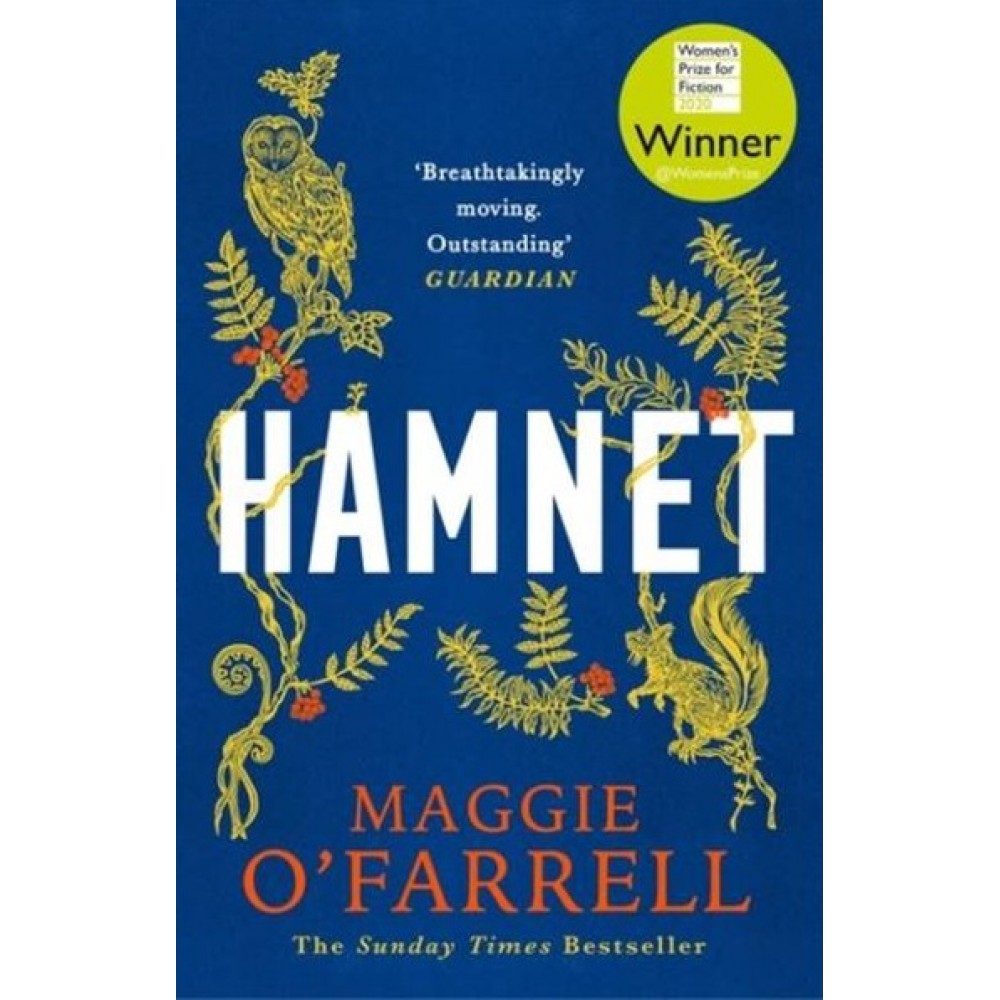
Hamnet by Maggie O’Farrell

Gosh I liked this book. Hamnet is a fictional account of William Shakespeare’s son Hamnet, who died at age 11 in 1596, most likely from the plague. The story has very little to do with the Shakespeare we know and much more to do with the women in his life: his mother, his wife, his two daughters, and his mother-in-law.

The first part of the story moves between two different times: Shakespeare falling in love with Agnes, an unsettling, free-spirited young woman who keeps a kestrel and wanders the woods. Shakespeare, through the ill-dealings of his father, is sent to tutor Agnes’ step brothers. He is intimidated by her strapping younger brother who acts as her protector from the village and the step-mother. But Agnes has her eye on Shakespeare and the pair devise a way to ensure they get married. The narrative shifts back and forth between this time of optimism and present day 1596 when Hamnet is struggling to help his twin Judith through a fever. She has suddenly fallen ill and nobody is around to help. The grandparents are out, his older sister is off running errands, and his mother is absent (Agnes is at the farm with her brother who has asked her to come manage her swarming bees). The two narratives crash together with Agnes coming home from the fields and discovering Hamnet fraught with worry and Judith on death’s door.

The second part of the novel moves us through the family’s despair at losing Hamnet. Shakespeare retreats to the playhouses of London and Agnes abandons the plan for her and the children to join him there. It’s impossible to hope that Judith will survive the dirt of London, and it’s impossible for Agnes to return to life as usual.

I liked that this book is very much about the women vs. Shakespeare himself. There is darkness, tension, and the intensity of living through plagues set in parallel to the herbology and wisdom of women, the bonding and bickering, plus the love and grief of the women in this novel.

If you like historical fiction, twist on familiar plots, or award-winning literary fiction, then this is for you.

It reminds me of James by Percival Everett in its retelling of a seemingly familiar story. It has the “don’t let the wool be pulled over your eyes,” draw of By Any Other Name of Jodi Picoult, the dark tension of Small Things Like These by Claire Keegan, and it has the brilliant writing of females characters like The Women by Kristin Hannah.
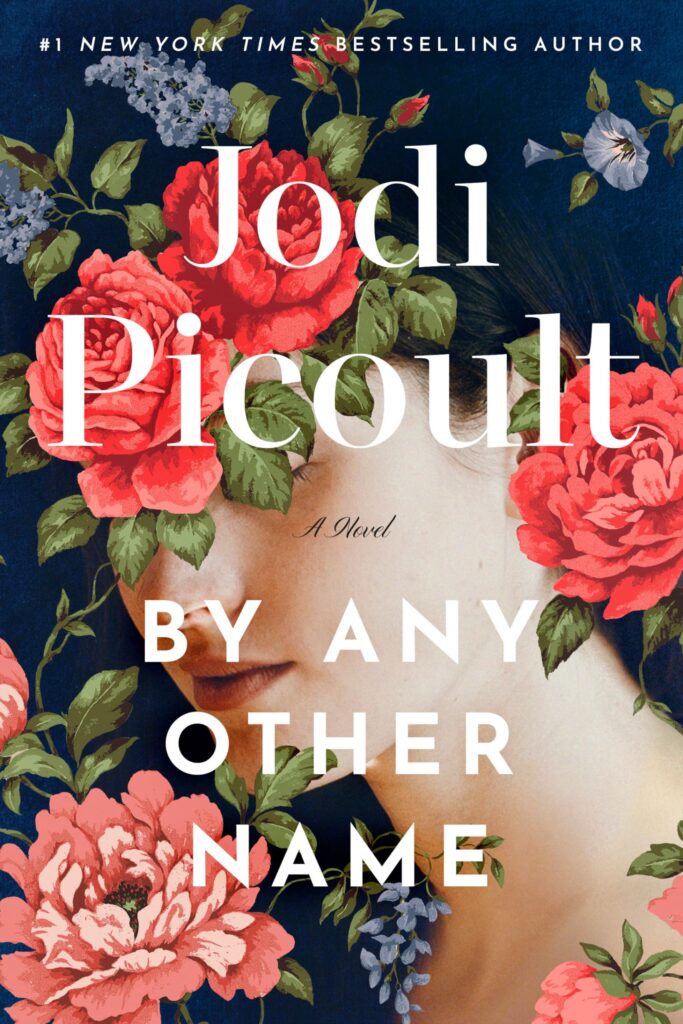
By Any Other Name by Jodi Picoult | Book Review

Version 1.0.0

By Any Other Name by Jodi Picoult is a fictionalized account of Emilia Bassano’s life from age 13 to 76 (1582-1645). As a young girl, she is a ward of English aristocrats who school her on languages, history, and writing. But at age 13, Emilia is contracted to Lord Chamberlain as his mistress in exchange for her family’s long-term contract as the Queen’s musicians. Emilia is young, an Italian Jew, highly educated, and an aspiring playwright. It’s just not a place and time for women to flourish. Emilia has little say in her life; she is unable to write professionally, or to publish her plays and poetry. She is a dark beauty in contrast to the white, powdered faces fashionable in court. And, she has to hide her Judaism. The thesis of the story is that the Shakespeare we laud today was no playwright. He bought plays from those who wished to remain anonymous and published them in his name. It was a business proposition that suited both parties, but a mistake for modern-day fans to attribute so much praise to him.

The modern-day story interwoven with Emilia’s is that of Melina, a descendant who is also an aspiring playwright. Melina’s challenge is that of being a woman in a field still dominated by white men (playwrights, producers, funders, reviewers). Her attempt to get a play produced is marred by sexism and her own mistakes in how she presents herself.

By Any Other Name is a thought-provoking novel about attribution: false representation, ghostwriting, and allonyms (pen names).

Whether you read it as fiction only, or as an exploration of the mythology that has sprung up around Shakespeare (a man who managed to write 37 plays alone while simultaneously being a full-time actor and producer), Picoult weaves in a lot of doubt about the providence of Shakespeare’s work. Other playwrights and poets of the time reference each other and were lauded publicly at the time of their death or buried in Poets’ Corner at Westminster Abbey. They left behind books and manuscripts in their wills. Yet Shakespeare left none. It was a time when writers collaborated and edited and finished each others’ works, whereas Shakespeare is said to have written alone. His plays humanize Jews, at a time when anti-Semitism was the norm. He never spent time in court, in the military, reading law, visiting Italy or Denmark, or playing music, or educating his daughters. Yet his plays and sonnets are ripe with details about music, courts, and law. His female characters are rich, spirited, and educated. Yet he did not educate his own daughters.

There are naysayers. And there are theories that multiple writers collaborated and published under the name Shakespeare. Regardless, novel or not, Picoult reminds us that women writing in Elizabethan times, doing science, crafting medicines, playing music and writing plays for home performances paved the way for women writers today. The main premise of By Any Other Name is that just because there is an absence of evidence (of women writers and playwrights) doesn’t mean there is evidence of absence.

If you like Jodi Picoult’s work (see Mad Honey), Kristin Hannah, or Kate Quinn then definitely give this a read.

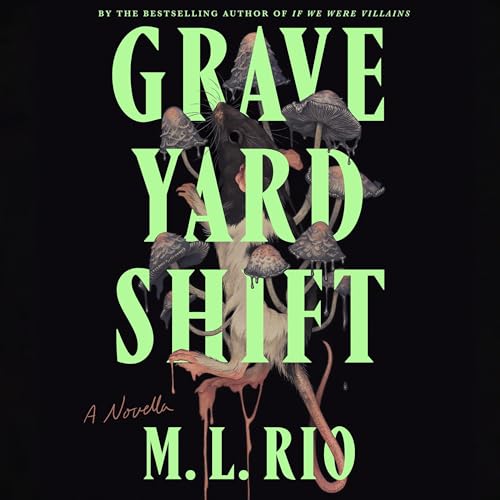
Graveyard Shift by M.L. Rio | Book Review

Graveyard Shift: A Novella is about a random group of night shift workers who all take their smoke break in the local cemetery. But one night they discover a newly dug grave. The cemetery was decommissioned so who or what is the new grave for and why was it dug in the middle of the night?

A deep sense of foreboding descends on the group, who eventually disperse. But curiosity gets the better of two of them who catch sight of the grave digger returning.

The mismatched group of five each have their own strengths, and they call upon each other to solve the mystery.

Part horror, part thriller, part ghost story, this creepy novella is perfect for a campfire read.

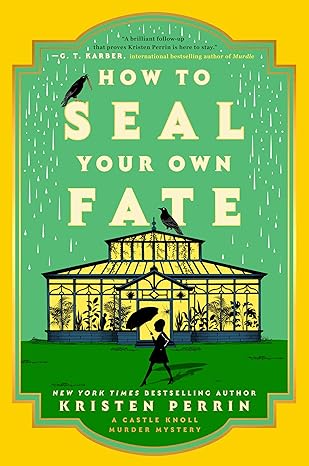
How to Seal Your Own Fate by Kristen Perrin | Book Review

Well, I spotted this at the library and did not realize it is the second book of a series. That said, it’s a good twisting mystery with a fun-loving amateur sleuth (and I could piece together most of the backstory). It reminds me a bit of Susan Juby’s Helen Thorpe series.

Annie Adams is settling into her new, rural England home that she’s inherited from her recently deceased aunt. Backstory: Annie’s aunt was murdered and Annie figured out the murder, which is how she inherited the house, which was contested by another descendant.

You know the drill. Quaint English village sees its weird share of murders. Young woman at a loss finds herself at the centre of the drama. There’s a love interest.

In this version, Annie encounters a fortune teller, Peony Lane, who holds secrets to a mysterious car crash in 1967 and Annie’s aunt’s involvement. But Peony Lane ends up dead in Annie’s house, which kicks off a series of unfortunate events that help unravel secrets from the past. And luckily enough, the love interest is the local cop.

If you like cozy mysteries, then I’d start with the first book in the Castle Knoll series.

How to Seal Your Own Fate is published by Penguin Random House Canada.

How to Solve Your Own Murder by Kristen Perrin | Book Review

How to Solve Your Own Murder is the first book in the Castle Knoll Files. I unknowingly read book 2 first. In short, Annie is tasked with solving the murder of her great-aunt Frances in order to claim Frances’ inheritance. If Frances’ step son solves the murder, then he inherits. And if either of them fail, then Oliver the property developer gets his claws into things and a golf course is on its way to quaint village of Castle Knoll.

The story alternates between Frances’ teenage past—where her murder was predicted by a fortune teller—and the present day where Annie discovers and reads Frances’ background story in diary entries, along with all of Frances’ suspicions and research into who her own murderer will be. The structure is great because it allows the reader to piece things together with Annie while also getting some insights directly from Frances’ perspective.

There is a whole cast of quirky (and suspicious) characters, all with connections to Frances and to a past murder. Like all great mysteries, Perrin laces this one with red herrings and twists and turns.

I thought this book was a fantastic series starter. If you like Susan Juby’s quirky detective Helen Thorpe, Anthony Horowitz’s cosy mysteries, or the idea of an unlikely heir dealing with mystery and murder in a small British village, then give this series a try.

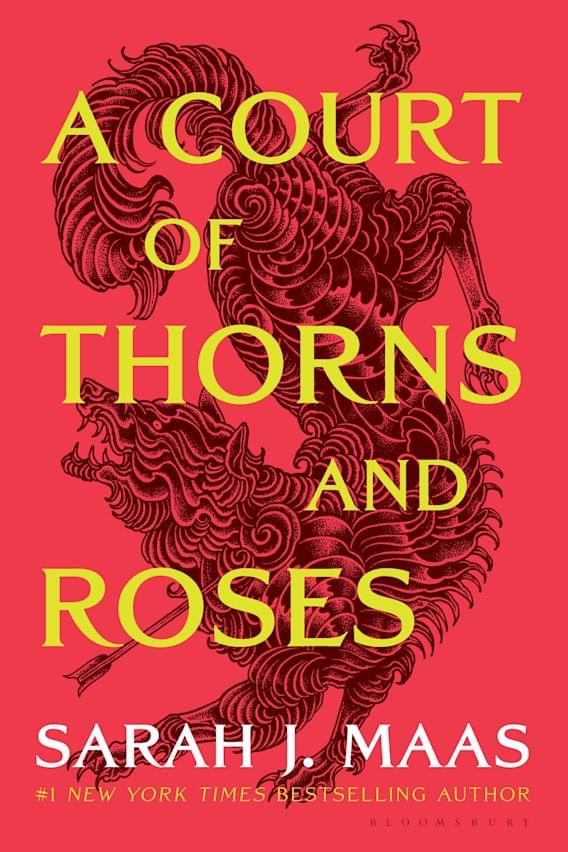
A Court of Thorns and Roses by Sarah J. Maas | Book Review

A Court of Thorns and Roses is a fantasy romance series that is wildly popular. I have resisted reading it until now. And although romance is not my favourite type of read, this was a fun escape into a terrifying magical world of warring faeries.

Feyre is the sole provider for her family. She hunts in the woods and sells what she can to feed her father and two sisters. One day in early Spring, she is faced with killing a wolf that is hunting the only wildlife she has seen in days. If she kills both the deer and the wolf then it will be a game-changing act for her family.

Turns out the wolf was a faerie in disguise, one sent by a high lord who turns up at Feyre’s and demands retribution. Feyre is dragged off to his lands, not as a slave, but as a guest. It’s all alarming to her (and perhaps obvious to the reader that she is going to fall in love with this guy).

I can totally see why fans are crazy for this series. I’m mildly interested in book 2 but get the sense that it will be full of angst and melancholy.

The author website has all the books, and info on her other series, so if you’re into a slightly spicy fantasy series then I’d start here.

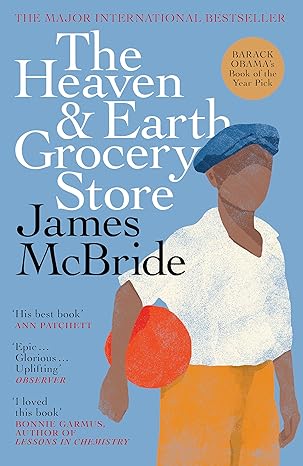
The Heaven & Earth Grocery Store by James McBride | Book Review

The Heaven & Earth Grocery Store opens with a mystery that quietly disappears into the background of the story. We are told upfront that workers in Pottstown, Pennsylvania, digging the foundation for a new housing development, have uncovered a skeleton. But the one person who may know anything about it disappears after being questioned by police. For the most part, this is inconsequential as the story skips back in time to the early days of the Jewish and Black residents who shared their lives on Chicken Hill, the neighbourhood adjacent to the wealthier, white part of Pottstown.

This is a lively, winding tale of Chona and Moshe, who own the grocery store, and their kindness towards their neighbours. It’s a story of race, religion and history, with an eclectic mix of characters. Addie and Nate, a Black couple, are Chona’s closest friends. Dodo is their nephew, who Chona hides from the authorities who want to send him to a special school for the deaf (but it’s really a dreadful asylum) . There’s also Malachi the dancer, Fatty, and Big Soap (an Italian immigrant who’s friends with Fatty), Rusty, Irv and Marv the Jewish Lithuanian shoemaker twins, and Doc Roberts whose deep-seated racism affects them all.

The general idea of America as a melting pot is challenged throughout the novel. One of the musicians speaking to Moshe, who owns the grocery but also a theatre, has this to say when Moshe says, “I didn’t know there were so many Spanish people around here.”

Mario smiled. “To you, they’re Spanish. To me, they’re Puerto Rican, Dominican, Panamanian, Cuban, Ecuadorian, Mexican, Africano, Afro-Cubano. A lot of different things. A lot of different sounds mixed together.”

The backstories of these Pottstown residents are presented in clever ways—and you understand the struggles between immigrant communities since the German Jews have different values than the Romanian, Hungarian, or Polish Jews; and the Blacks from the South likewise have different experiences and practices—but the overarching story is that of Chona and how she sees the good in people and pushes past their emotional barriers. She helps when others turn away, and when injustice is done to her, the community steps up.

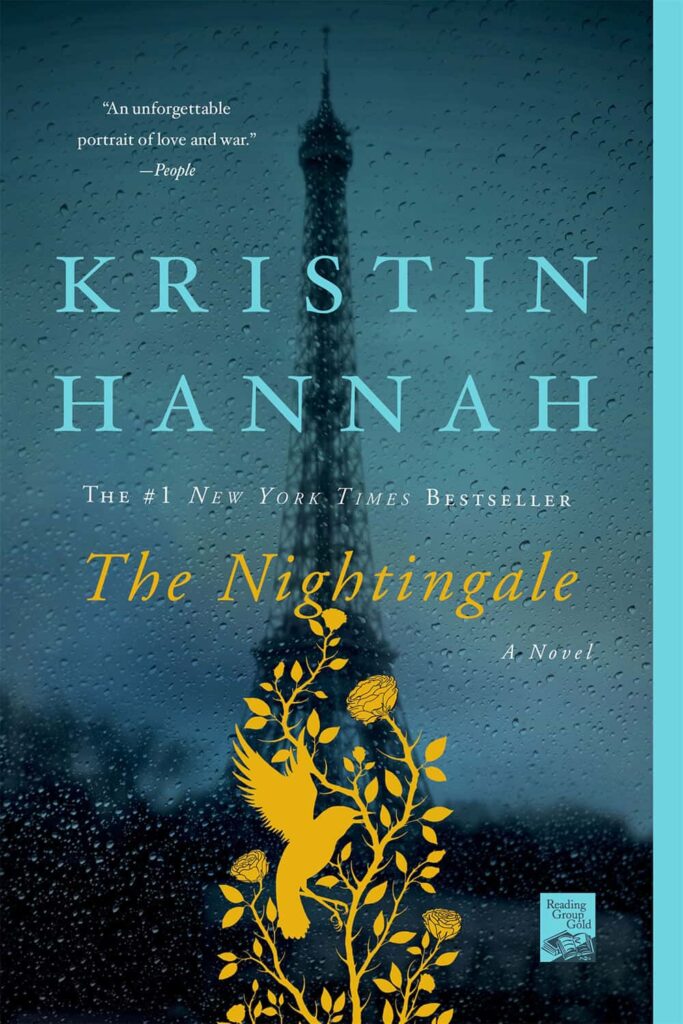
The Nightingale by Kristin Hannah | Book Review

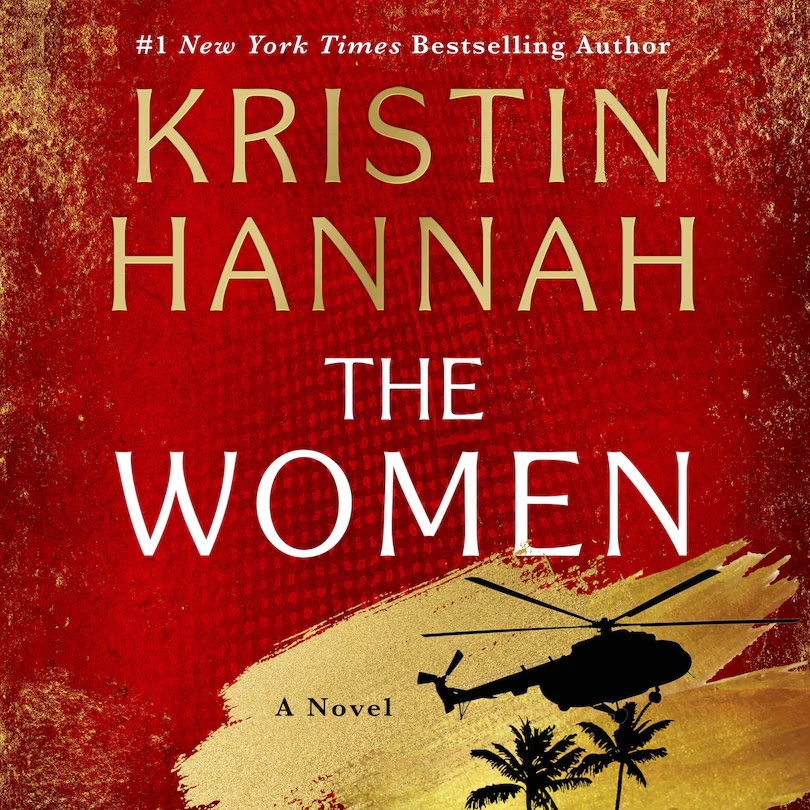
Kristin Hannah is the author of The Women, which I really enjoyed. The writing here is also exceptional. The Nightingale is the story of the Rossignol sisters who struggle to survive in France during the German occupation in WWII.

Vianne is the elder sister, married, and with a young daughter. Her husband is a prisoner of war and she has a German officer billeted in her home. Not by choice.

Isabelle is the defiant younger sister whose ideals lead her to play a key role in the Resistance. Rossignol means nighingale and she is the Nightingale, a sought after thorn in the side of the Germans. The Nightingale is helping Allied pilots, shot down in France, escape over the Pyrenees.

One sister has everything to lose and the other has nothing to lose. The difference drives them apart, but they each risk their lives for the other.

Having just been to Northern France to the D-Day beaches and through the towns south of there that were occupied, The Nightingale illuminated my experience of those bombed out villages and the stories of resistance that remain at the heart of French culture.

This is a great audiobook if you want to hear the pronunciation of the French villages and character names.

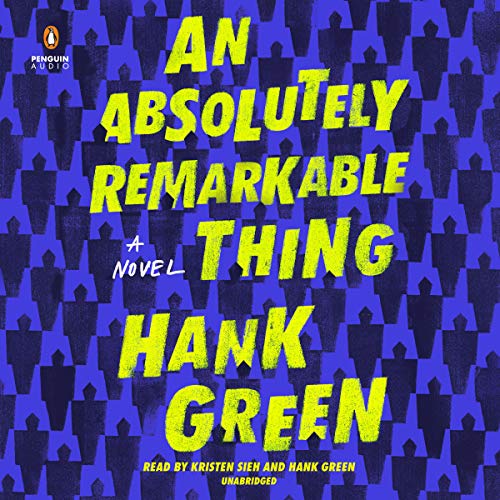
An Absolutely Remarkable Thing by Hank Green | Book Review

Hank Green — co-creator of Crash Course, Vlogborhters, and SciShow, plus brother to John Green — has written a funny and poignant story about two 20-somethings who stumble into fame.

April May is coming home from work, late one night, and stumbles across a giant sculpture. It’s New York. Things like that happen. But this installation captivates her. It’s a 10-foot-tall Transformer style figure in a suit of armour. April convinces her friend Andy to meet her at the sculpture with his video camera, and they film April introducing “Carl” and upload it to video.

April has a rude awakening the next day when she learns that “Carls” have appeared around the world and every news media wants to interview her and Andy. The news is spreading so quickly that it’s tricky to deal with their new celebrity. But, Andy’s dad is a lawyer and since the news channels have used their video without permission, he is getting them, not only coverage, but cash. A lot of cash.

The novel is about the pressure April and Andy (although mostly April) have to deal with, the way it changes how they interact with other friends, and how they move through the world and make money. It’s a great social commentary on the vilification and adoration that influencers face.

Friendships are formed and lost. Great puzzles are solved. Good intentions devolve. An Absolutely Remarkable Thing is a great novel and a cautionary tale.

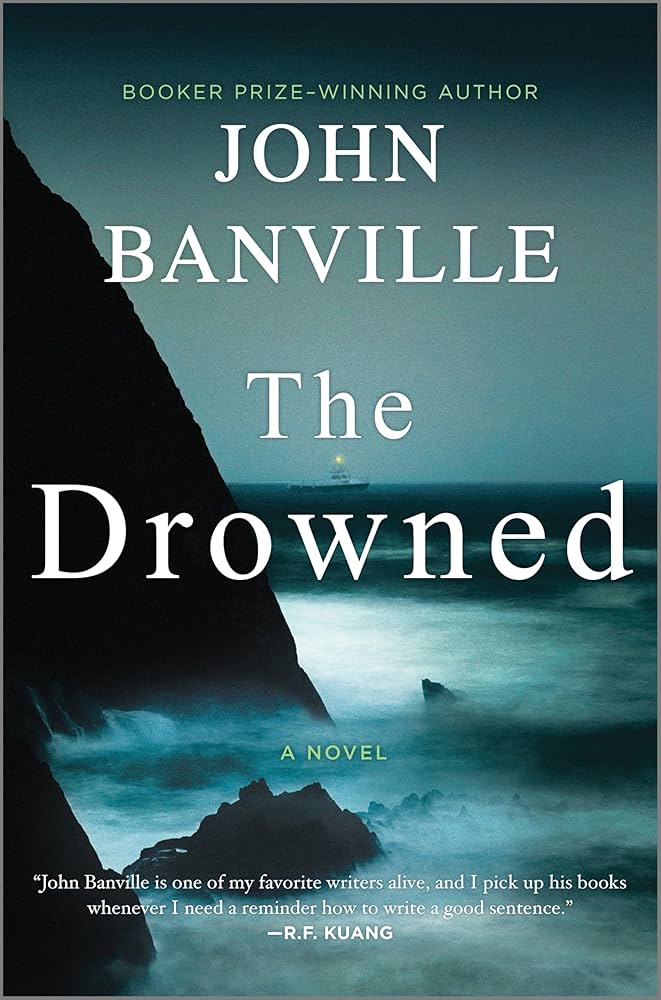
The Drowned by John Banville | Book Review

John Banville is an exceptional writer. The Drowned is a dark and moody tale set in 1950s Ireland. A loner comes across an abandoned car (still running and with the driver door wide open). Against his better judgment, he has a closer look. What unfolds is a troubled story of a missing woman, presumed drowned, and the deviant nature of her husband and the people he turns to for help.

Called in from Dublin to investigate is Detective Inspector Strafford, and through him we are introduced to pathologist Quirke, Chief Hackett, and Quirke’s daughter Phoebe. Their stories, running in parallel to the mysterious disappearance of the woman, are all about the secrets we hide, and the complicated ways that justice is served.

If you like John Banville, this read is top drawer. Similar writers would be Claire Keegan (Small Things Like These) or Anne Enright (The Green Road).

Published in Canada by HarperCollins

« Older posts Newer posts »

© 2026 So Misguided

Theme by Anders NorenUp ↑