Plain words, uncommon sense

Author: Monique (Page 23 of 129)

In awareness of Banned Books

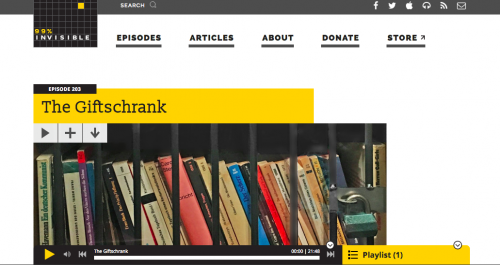
Hey it’s Banned Books Week and 99% Invisible has an awesome podcast that is 100% worth listening to. It’s about the Griftschrank, or “poison cabinet”, in the Bavarian State Library in Munich, and other “poison cabinets” or rooms that have been used over the years for banned or controlled substances (like pharmaceuticals, or Mein Kampf) and other works considered dangerous.

The Giftschrank

image

Banned Books Week is an annual awareness campaign that celebrates the freedom to read. I enjoy the yearly reminder of the censorship and hardship that books can endure. And every year there is some new tip or piece of advice about how to deal with censorship, how to embrace diversity and how to cope with challenges. This year I discovered that NCAC has a censorship toolkit to help parents, teachers and schools deal with challenges and requests to ban books:

NCAC’s Book Censorship Action Kit

Book Review: Station Eleven by Emily St John Mandel

image

Station Eleven by Emily St. John Mandel is a haunting novel about the end of the world as we know it. SARS has come and gone but a virus called the Georgian Flu starts in Russia and rapidly makes its way around the world. People get flu-like symptoms and are dead within 3-4 hours. This means that families are separated. Parents fall ill at work and never return home. Kids are left to their own devices. There is mass panic as people try to flee‚ but where can they go? Highway on/off ramps are backed up, traffic is at a standstill, people walk and fall along the road or manage to survive and set up small settlements. There’s no one around to refuel gas stations. The existing gas stores eventually expire. The internet fails, electrical grids turn off, generator power dies. There are no more medicines, no more processed foods, no more new clothes or soaps or other commonplace items. The few people left ransack buildings for food, shelter and other necessities.

Station Eleven is told mostly 20 years after the collapse of the world as we know it. There are small settlements around Lake Michigan and we follow a travelling symphony that performs Shakespeare around the area. Members of the symphony are separate by a maundering group intent on stockpiling food and weapons. The story line is a mix of how they get separate, whether they’ll reunite, and flashbacks to the before the flu and the first years after the collapse. It’s fascinating.

As a thought exercise, this book is a terrible look at what could happen to us when we have to do without. There are friendships, partnerships, and strong group dynamics. But there’s also greed, melancholy and the type of strife that undermines us even today.

I recommend having a little taste of this sci-fi, apocalyptic world full of Shakespeare, music, and the plague.

Book Review: Slade House

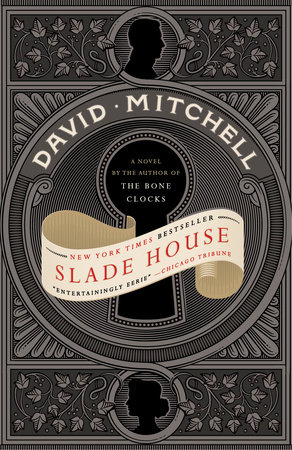
Slade House by David Mitchell is a fast-paced, gripping ghost story about two immortals who prey on visitors to Slade House. Norah and Jonah Grayer are twins who learn the secret of eternal life. Yet the magic that sustains them requires the soul of a particular type of person, who they elaborately lure into their web every nine years. The novel spans from 1979 to 2015 with each episode taking place on the last Saturday in October (close to, or on, Halloween) when a secret entrance to Slade House is revealed to its intended victim.

image

Each episode is narrated by the newest victim, which lets Mitchell experiment with the tone of each era and the social and political dynamics of the scenes.

Slade House is a clever, creepy tale that started as a series of tweets. In some ways it is a companion to Mitchell’s previous novel The Bone Clocks, but really it is a continuation of the great uber-novel he has been writing for the last 15 years. Each of his novels has references to characters, settings or background details from the previous works. And although each novel stands alone, together they construct a sprawling universe.

image
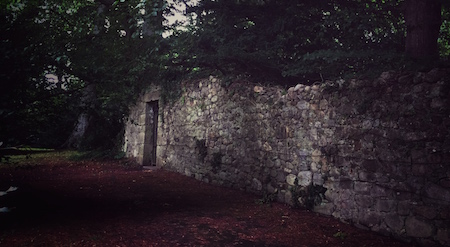
This side gate at Powerscourt reminded me of Slade House.

Slade House by David Mitchell
Published by Penguin Random House

Best Burger in Dingle

The complete guide to the burgers of Dingle. It’s a short list. Go to Chewy, a pop-up burger stand beside Dick Mack’s pub and order a double cheeseburger and shoestring fries.

image

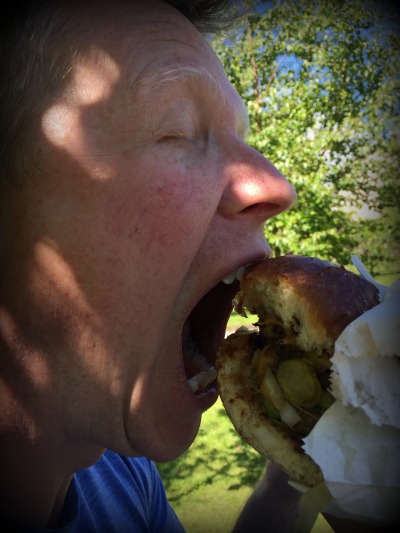
Sure, there may be other places in Dingle that serve a burger, but if you mean business then take your business to Chewy. Run by a man named Aussie, Chewy is a pop-up burger stand beside Dick Mack’s pub that has been around for about 3 weeks. Chewy burgers are made with West Kerry beef and freshly baked Courtney’s brioche buns. Aussie is, hands down, serving the best burger in Dingle.

image

Dingle is a modest town in County Kerry, Ireland, with several shops and pubs, a whiskey distillery and two Murphy’s Ice Cream parlours. Dingle is a common stop on any tour of the Dingle Peninsula. Follow the stream of tourists up to Dick Mack’s and grab yourself a beer, then slip around the side of the building to Chewy’s.

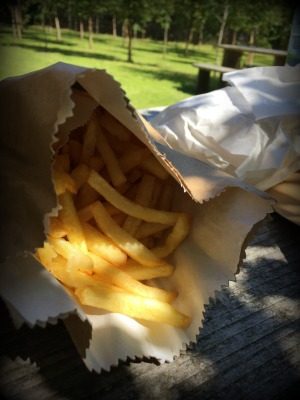
The double cheeseburger is a massive thing of beauty, and the single is no laughing matter either. The burger and shoestring fries combo is a winner.

image

image

You might have a 15-minute wait if there’s a big queue or a larger order before you but don’t falter. This is the burger you want. Stick it out. And when you have that tasty burger and fries in hand then wander across the street to the secret gardens behind the church.

image

30 Days of Sunshine Tour

image

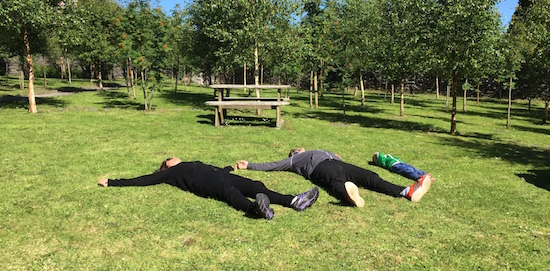
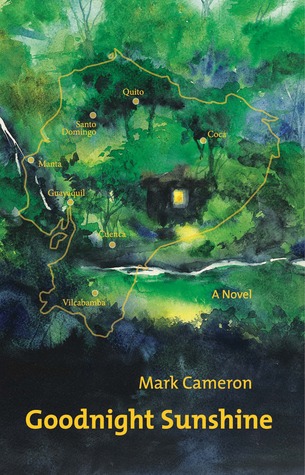
Mark Cameron, author of Goodnight Sunshine has a fun BC tour planed this summer.
4200 km, 25+ locations
1 family of 4 in a camper van

Goodnight Sunshine is Cameron’s debut novel and he’s hustling the book with a 6-week working vacation that will stop at 25+ municipalities around the province (mostly readings at libraries, with a few farmers’ markets and bookstore signings as well. He’ll be charting the course via twitter @markofwords

image

Quote: Sleepwalking through life on a quiet island near Seattle, Oliver Bruce is struck twice in one day. Emerging unscathed from an accident that leaves his SUV a crumpled mess, Oliver finds a fragment of a letter about an invention that could change the global energy sector. The discovery brings Oliver face-to-face with the widening chasm between the life he is living, a tedious existence as a cafe owner, husband and father, and the richer life he longs for.

Drawn toward the mystery behind the message he intercepted, and to the wife of the man who wrote it, Oliver finds himself on a mission to locate the invention, a journey that takes him into the jungles of Ecuador.

Told against a backdrop of colorful characters and exotic locations, Goodnight Sunshine unwinds Oliver’s gradual descent from youthful optimism to mid-life malaise, ultimately forcing him to re-evaluate his core beliefs and to face the true source of his discontent.

Mark is from Gibsons, BC and you can find out more about his book here: https://www.goodreads.com/book/show/27968672-goodnight-sunshine
Tour info here: http://www.catchourdrift.ca/press-kit.html

Come Here to Me: A great blog of Dublin history, memories and what it’s like today and yesterday

The unrecorded working-class history of Dublin is being recorded.
https://comeheretome.com/

Quote:
“Come here to me” is Dublin slang used to mean “Listen to this” or “I’ve something to tell you”. These phrases tend to imply a secretiveness or revelatory importance to the upcoming piece of information.

#workingclass
#socialhistory
#musichistory

See the channel and app StorymapDublin for more.

Book Review: The Noise of Time by Julian Barnes

image
Julian Barnes’ latest novel is a fictionalized account of how composer Dmitri Shostakovich survived Stalin. The Noise of Time is perfectly titled. Shostakovich’s opera Lady Macbeth of Mtsensk is described as “muddle instead of music.” Just noise. The problem with this bad review is that it’s Stalin condemning not only the opera but also the man. From then on Shostakovich lives in fear of execution but his punishment is worse. He instead lives through the noise of time. The noise created by inferior composers who are willing to tow the party line. The noise he must make himself to protect his family, all the while losing his sense of integrity. Shostakovich is brought to America to praise the Soviet system, to denounce composers he wholeheartedly admires, to compose music that gets approved. It’s a crushing experience beautifully articulated by Barnes.

The Guardian review (Jan 22) offers a fantastic description of the “conversations with Power” that Shostakovich is subjected to throughout his life. As a reader unfamiliar with Shostakovich, Barnes provides a well-researched, and very intimate, perspective on the systematic pressures put on artists in the Soviet Union and the propaganda machine that influenced art.

Quote: In May 1937 a man in his early thirties waits by the lift of a Leningrad apartment block. He waits all through the night, expecting to be taken away to the Big House. Any celebrity he has known in the previous decade is no use to him now. And few who are taken to the Big House ever return.

A slim and powerful novel.
A story about the collision of Art and Power, about human compromise, human cowardice and human courage, it is the work of a true master.

The Noise of Time by Julian Barnes
JulianBarnes.com
Published by Jonathan Cape

Book Review: The Book of Learning by ER Murray

Chosen for the 2016 Citywide Reading for Children Campaign run by Dublin UNESCO City of Literature and Dublin City Council’s Libraries Services.

image

The Book of Learning is the first in a trilogy from ER Murray about 12-year-old Ebony Smart. It seems that Ebony has had nine lives. She doesn’t discover that until her Grandpa dies. The strange circumstances of her Grandpa’s death push her into the arms of family that she doesn’t know and doesn’t trust. Are they responsible for her beloved Grandpa’s death? Why did he never mention them? It’s a mystery and poor Ebony only has her wits, her pet rat and a riddle-filled Book of Learning to guide her way. Who’s on her side? Were there really eight other Ebony Smart’s? Ebony needs to find her Grandpa’s murderer before it’s too late.
http://www.mercierpress.ie/irish-books/book_of_learning/

This adventure book is set in Dublin and is full of mystery and wonder. There’s obviously more story brewing as it’s the first of three novels. If you’re looking for strong, defiant characters, a good story and a bit of magic then this is a great read for 8-12 year olds. Younger readers might find some of the scenes scary but that shouldn’t deter parents from reading it with under 8s. And I enjoyed it as an adult reader so it would be fun for over 12s as well.

The Rathmines library had stacks of this book on display and I’ve seen bus posters and promos around Dublin. There’s good coverage of this campaign.

Book Review: A God in Ruins by Kate Atkinson


image

A God in Ruins is marvellous.

Kate Atkinson, author of Life After Life, is one of those novelists whose writing is very clever yet it comes off naturally. Where Life After Life explored infinite chances, as lived by Ursula Todd, A God in Ruins is the life lived by her younger brother Teddy.

Teddy is a pilot with Bomber Command during World War II and his story is wonderfully told in the most non-chronological way. This is the cleverness I speak of. Atkinson tells the story in this patchwork fashion where the reader comes to understand the whole story but the characters often seem well ahead of the game, it being their life and all. Atkinson moves the reader back and forth between a present time and a past. It reminded me of The Time Traveller’s Wife in that way, which I enjoyed very much.

I was fascinated by the details of the air raids because of the first-hand accounts I have from James’ grandfather. Of the 120,000 who served, 55,573 were killed including over 10,000 Canadians. Teddy is British, which doesn’t get him extra luck one way or the other. We know early on that Teddy survives the war because we know that he has a wife and child. But his wife dies. We don’t know why, but we do know that his daughter is a bit of a terror, and probably was from birth anyway.

There are lovely repeated references throughout the book, like the exaltation of skylarks (the lifting of birds/planes), quips about whether a certain character believes in reincarnation (which is funny if you’ve read the previous title), lucky charms, and references to poetry and novels that offer opportunities to think deeper if you so desire.

Although the setting is during the war, or the present day is seen through that lens, it’s not a war novel. It’s more about the mystery and revelation we have throughout our life. The knowledge we gain after the fact, and how we choose to respond or not respond.

This novel is a strong contender for favourite read of 2016.

#AGodInRuins
www.kateatkinson.co.uk

Favourite Books of 2015

I used to keep track of my favourite reads each year so back at it. For 2015, my favourite new fiction title was Undermajordomo Minor by Patrick deWitt. Quirky, funny, gothic romance. This novel reminded me of The Grand Budapest Hotel.

My favourite non-fiction was Separation Anxiety by Miji Campbell. Ordinary woman goes through ordinary growing pains but with notable wit and perseverance. This memoir reminded me of Mindy Kaling, with a Canadian-girl-next-door vibe.

Now, what does 2016 hold?

The High Mountains of Portugal by Yann Martel
A Gathering of Shadows by V.E. Schwab
Precious Cargo: My Year of Driving the Kids on School Bus 3077 by Craig Davidson, Knopf Canada

« Older posts Newer posts »

© 2026 So Misguided

Theme by Anders NorenUp ↑